Published: May 9, 2026
Last Updated: May 9, 2026
Arthritis affects millions of people worldwide and can significantly reduce mobility, joint function, and quality of life. Osteoarthritis (OA) is primarily linked to cartilage degeneration, while rheumatoid arthritis (RA) is an autoimmune disease driven by chronic inflammation.
Although medications remain important for treatment, growing research suggests that certain evidence-based supplements for osteoarthritis and rheumatoid arthritis may help support joint comfort, stiffness, and inflammatory balance when combined with proper medical care.
This guide reviews the best supplements for osteoarthritis and rheumatoid arthritis and is strictly based on randomized controlled trials (RCTs), considered the gold standard in clinical research ensuring that all recommendations are grounded in solid scientific evidence. This makes it a rare evidence-based article focused exclusively on
Difference Between Osteoarthritis and Rheumatoid Arthritis
Difference Between Osteoarthritis and Rheumatoid Arthritis
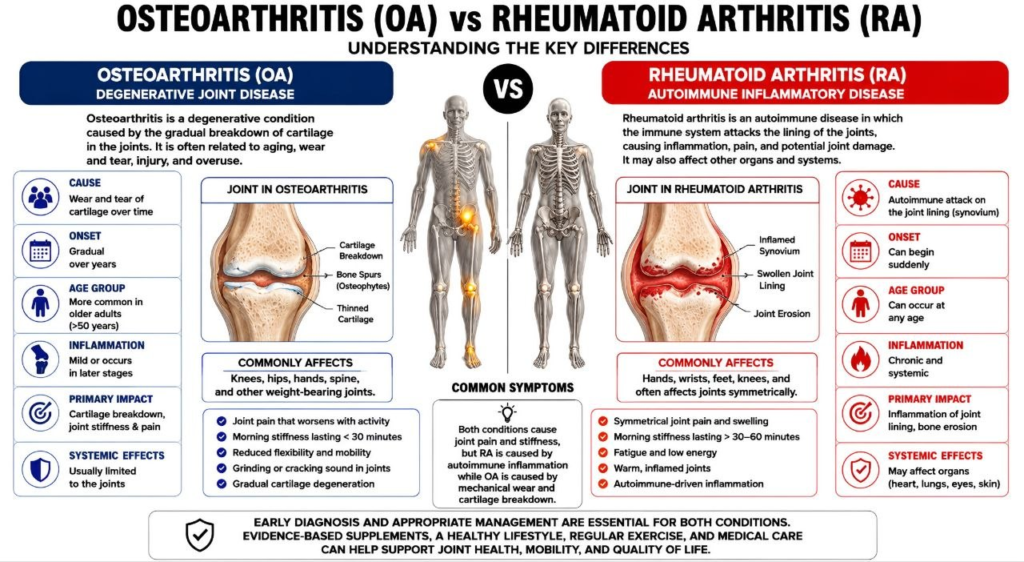
Although osteoarthritis (OA) and rheumatoid arthritis (RA) both affect the joints, they are very different conditions with distinct underlying causes.
Osteoarthritis is primarily a degenerative joint disorder caused by the gradual breakdown of cartilage over time. It is commonly associated with aging, joint overuse, previous injuries, obesity, and mechanical stress on the joints. OA most frequently affects weight-bearing joints such as the knees, hips, hands, and spine.
Rheumatoid arthritis, on the other hand, is a chronic autoimmune disease in which the immune system mistakenly attacks the lining of the joints. This can lead to persistent inflammation, joint swelling, stiffness, and progressive joint damage. Unlike OA, rheumatoid arthritis may also affect other organs and systems in the body.
Common Symptoms of Osteoarthritis (OA)
•Joint pain that worsens with activity
•Morning stiffness lasting less than 30 minutes
•Reduced flexibility and mobility
•Grinding sensation in joints
•Gradual cartilage degeneration
Common Symptoms of Rheumatoid Arthritis (RA)
•Symmetrical joint pain and swelling
•Morning stiffness lasting longer than 30–60 minutes
•Fatigue and low energy
•Warm, inflamed joints
•Autoimmune-driven inflammation
Common Symptoms of Both Osteoarthritis and Rheumatoid Arthritis
Although osteoarthritis (OA) and rheumatoid arthritis (RA) have different underlying causes, both conditions can produce several overlapping symptoms that affect daily activities and quality of life.
Common symptoms seen in both OA and RA include:
•Joint pain and tenderness
•Morning stiffness
•Reduced mobility and flexibility
•Swelling around affected joints
•Difficulty performing daily activities
•Joint weakness and discomfort during movement
However, rheumatoid arthritis is generally associated with stronger inflammatory symptoms and systemic immune involvement, while osteoarthritis is more closely linked to cartilage degeneration and mechanical joint wear over time.
Because inflammation plays an important role in both conditions, researchers have explored several evidence-based supplements for osteoarthritis and rheumatoid arthritis that may help support joint comfort, mobility, and inflammatory balance alongside proper medical care.
How the Best Supplements for Osteoarthritis and Rheumatoid Arthritis May Help
Many supplements for osteoarthritis and rheumatoid arthritis are studied for their ability to influence inflammation, oxidative stress, cartilage degradation, and immune signaling pathways.
Potential benefits may include:
•Reduced joint discomfort
•Improved morning stiffness
•Better mobility and physical function
•Support for inflammatory balance
•Reduced oxidative stress
However, research quality varies between supplements, and results are not always consistent across studies.
1. Curcumin (Turmeric Extract)
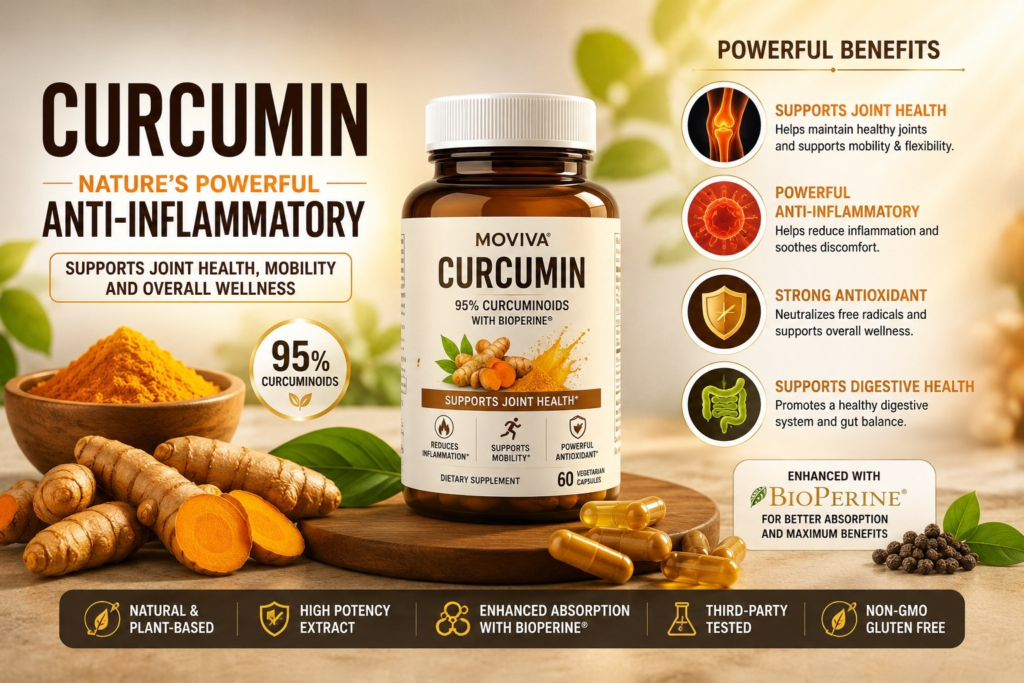
Curcumin is one of the most extensively researched natural compounds for inflammatory joint conditions. It is the primary active compound found in turmeric.
Mechanism of Action
•May inhibit inflammatory cytokines such as TNF-α, IL-1β, and IL-6
•May reduce NF-kB pathway activation involved in chronic inflammation
•Supports antioxidant activity and oxidative stress reduction
Benefits
•May help reduce joint pain and stiffness
•May improve physical function in OA and RA
•May support inflammatory balance in OA and
What Research Shows
Rheumatoid Arthritis (RA)
Several randomized controlled trials and meta-analyses suggest curcumin supplementation may help reduce disease activity, joint tenderness, and inflammatory markers in rheumatoid arthritis patients. A 2023 systematic review published in Frontiers in Immunology reported improvements in inflammatory outcomes and clinical symptoms compared with placebo groups.
Osteoarthritis (OA)
Human studies in knee osteoarthritis have also shown promising results. A systematic review of randomised controlled trials found turmeric and curcumin extracts may help improve pain scores and physical function in individuals with knee osteoarthritis, with some studies reporting effects comparable to common pain medications.
Dose Used in Studies
Most human studies used approximately 500–1500 mg daily of standardized curcumin extract, often combined with absorption enhancers such as piperine.
If you’re considering one of the best well-formulated highly bioavailable organic curcumin supplements with good absorption, you can explore this option here:
Turmeric 3D Award-Winning Powerful 3-in-1 USDA Certified Organic Fermented Turmeric Complex for Healthy Inflammation Support
2. Omega-3 Fatty Acids
Omega-3 fatty acids, particularly EPA and DHA found in fish oil, are among the most researched supplements for inflammatory conditions. They have been extensively studied for rheumatoid arthritis and are increasingly being investigated for osteoarthritis due to their potential anti-inflammatory effects.
Mechanism of Action
•May reduce production of inflammatory eicosanoids and cytokines
•Supports immune regulation and joint health
•May help decrease oxidative stress associated with chronic inflammation
Benefits
•May help reduce morning stiffness
•May support joint comfort and mobility
•May help reduce inflammatory activity in RA
What Research Shows
Rheumatoid Arthritis (RA)
The Long-term clinical trial in rheumatoid arthritis patients suggest omega-3 supplementation may reduce joint tenderness, morning stiffness, and disease activity. Some studies also reported reduced reliance on nonsteroidal anti-inflammatory drugs (NSAIDs) among participants receiving fish oil supplementation.
Osteoarthritis (OA)
A 2023 Meta-analyses of randomized controlled trials (RCTs) published in Journal of Orthopaedic Surgery and Research osteoarthritis patients suggest omega-3 fatty acids may modestly improve pain and physical function, particularly in knee osteoarthritis. However, results remain somewhat inconsistent due to differences in dosage and study duration.
Dose Used in Studies
Most studies used approximately 1–3 grams daily of combined EPA and DHA
3. Ginger
Ginger has been traditionally used for pain and inflammatory conditions for centuries. Modern research has focused on its active compounds, including gingerols and shogaols, which may influence inflammatory pathways involved in arthritis.
Mechanism of Action
•May reduce inflammatory cytokine activity
•Supports antioxidant defenses
•May influence COX and LOX inflammatory pathways
Benefits
•May help reduce joint discomfort and stiffness
•May support mobility and inflammatory balance
•May assist in reducing inflammatory activity in RA
What Research Shows
Rheumatoid Arthritis (RA)
A Randomized controlled trial in patients with active rheumatoid arthritis suggest ginger supplementation may reduce inflammatory gene expression levels, including TNF-α and IL-1β. Some clinical studies also reported improvements in disease activity and inflammatory markers.
Osteoarthritis (OA)
A meta-analysis of randomized placebo-controlled trials found ginger supplementation may provide modest pain relief and functional improvement in osteoarthritis patients, especially in knee OA. However, gastrointestinal side effects were occasionally reported in some studies.
Dose Used in Studies
Human studies commonly used 500–2000 mg daily of ginger powder or standardized extract.
4. Garlic
Garlic contains sulfur-containing compounds such as allicin and S-allyl cysteine that may possess antioxidant and anti-inflammatory properties. Researchers have explored its role in immune regulation and inflammatory joint diseases.
Mechanism of Action
•May support immune modulation
•Possesses antioxidant and anti-inflammatory activity
•May influence inflammatory cytokine production
Benefits
•May support inflammatory balance
•May help improve arthritis-related symptoms
•May contribute to oxidative stress reduction
What Research Shows
Rheumatoid Arthritis (RA)
A randomized double-blind placebo-controlled trial in women with rheumatoid arthritis found garlic supplementation significantly improved pain scores, disease activity, and inflammatory markers compared with placebo groups.
Osteoarthritis (OA)
Research on garlic in osteoarthritis remains more limited, but systematic reviews of randomised clinical trials suggest garlic compounds may have potential benefits for pain and joint function. Researchers note that additional large-scale clinical trials are still needed to confirm these findings.
Dose Used in Studies
Most human studies used approximately 500–1000 mg daily of garlic extract or aged garlic formulations.
5. Vitamin D
Vitamin D is essential for bone metabolism, immune regulation, and musculoskeletal health. Low vitamin D levels are commonly observed in individuals with inflammatory and degenerative joint disorders.
Mechanism of Action
•Supports bone and immune health
•May influence inflammatory pathways and cytokine activity
•Helps maintain musculoskeletal function
Benefits
•May support physical function and mobility
•Particularly important in individuals with vitamin D deficiency
•May assist inflammatory regulation in RA
What Research Shows
Rheumatoid Arthritis (RA)
Randomised controlled trials suggest vitamin D supplementation may significantly improve inflammatory and clinical outcomes in rheumatoid arthritis patients, especially among those with insufficient vitamin D status. Some trials reported improvements in disease activity and inflammatory markers.
Osteoarthritis (OA)
A 2024 Systematic reviews in knee osteoarthritis suggest maintaining sufficient vitamin D levels may be associated with improved pain outcomes, physical function, and slower structural progression in certain patients.
Dose Used in Studies
Dosages varied widely between studies, commonly ranging from 1000–4000 IU daily.
6. Willow Bark
Willow bark has been traditionally used in Europe for pain relief and musculoskeletal discomfort for centuries. It contains salicin compounds that are chemically related to aspirin and may possess mild anti-inflammatory effects.
Mechanism of Action
•May influence pain signaling pathways
•Possesses mild anti-inflammatory activity
•Traditionally used for musculoskeletal pain support
Benefits
•May help reduce temporary joint discomfort
•May support pain management in OA
•Traditionally used for inflammatory joint conditions
What Research Shows
Rheumatoid Arthritis (RA)
Current evidence for willow bark in rheumatoid arthritis remains limited. A 2023 meta-analyses of randomised controlled trials suggest potential pain-relieving effects, but researchers emphasize that more high-quality randomized controlled trials are needed before firm conclusions can be made.
Osteoarthritis (OA)
A 2001 Randomized placebo-controlled clinical trial in osteoarthritis patients suggest standardized willow bark extract may help reduce pain symptoms and improve physical comfort. However, overall evidence quality remains moderate and less robust compared with supplements such as curcumin or omega-3 fatty acids.
Dose Used in Studies
Some human trials used extracts standardized to approximately 240 mg salicin daily.
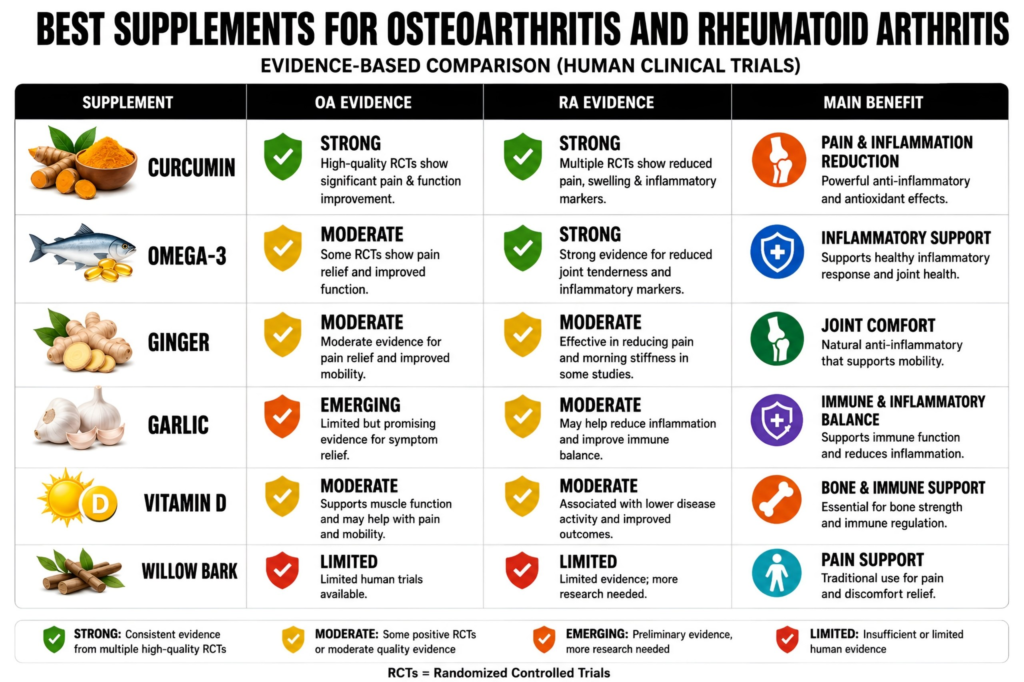
Comparison of the Best Supplements for Osteoarthritis (OA) and Rheumatoid Arthritis (RA)
The best supplements for osteoarthritis and rheumatoid arthritis differ in evidence strength and mechanisms. This table is self evident to tell you which is the best of all the supplements for OA and RA.
Limitations of Current Research
Although many supplements for osteoarthritis and rheumatoid arthritis show promising results several limitations remain:
Some studies involve small sample sizes
Supplement quality and dosages vary
Long-term safety data may be limited
Results are not always consistent across trials
More large-scale human clinical trials are still needed for many natural compounds.
Safety & Expectations for Arthritis Supplements
When using the best supplements for rheumatoid arthritis, it is important to understand that these supplements are intended for supportive management, not as a cure for the disease.
What to Expect
These Supplements have fewer side effects compared to conventional pain killers and may help reduce inflammation and improve symptoms such as pain and stiffness
Clinical benefits may take 2–8 weeks to become noticeable
Results vary depending on disease severity, individual response, and consistency of use
Safety Considerations
Most supplements discussed in this guide are supported by human clinical trials, including randomized controlled trials (RCTs), and are generally well tolerated.
However:
Effects can differ between individuals
Dosage and formulation play an important role
Some supplements may interact with medications
For example:
Curcumin and omega-3 may affect blood clotting
Garlic may interact with blood thinners
Willow bark may not be suitable for individuals sensitive to aspirin
Always consider professional guidance when adding supplements to an existing treatment plan.
Supplements should not replace prescribed arthritis treatments unless advised by a qualified healthcare professional.
Pro Tip: Combining Supplements
Combining multiple anti-inflammatory supplements such as curcumin, omega-3 fatty acids, and garlic may provide broader support by targeting different inflammatory pathways involved in rheumatoid arthritis.
However:
Evidence on combined use is still limited in randomized clinical trials
Not all combinations have been studied extensively
Individual responses may vary
Final Verdict: Best Supplements for Osteoarthritis and Rheumatoid Arthritis in 2026
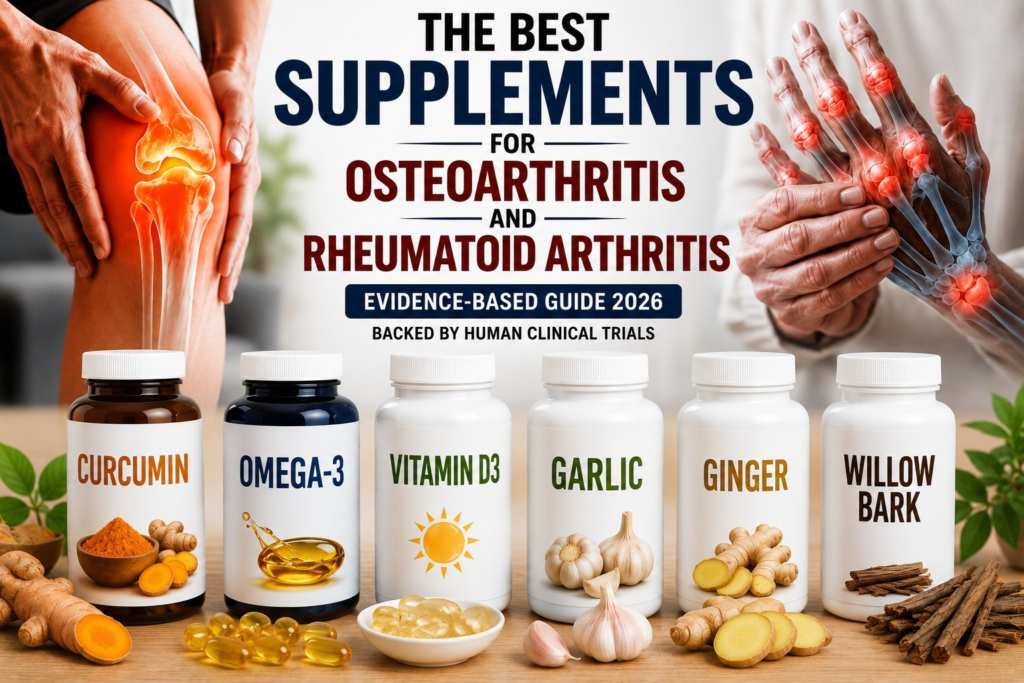
Current human research suggests curcumin, omega-3 fatty acids, ginger, garlic, vitamin D, and willow bark may provide supportive benefits for osteoarthritis and rheumatoid arthritis.
Overall, the best supplements for osteoarthritis and rheumatoid arthritis include curcumin and omega-3 fatty acids. Currently curcumin has the strongest overall clinical evidence and is suggested as alternative to conventional pain killers. For a more detailed guide, see our internal article on Best Curcumin Supplements.
However, results can vary depending on supplement quality, dosage, and individual health status.
A balanced anti-inflammatory diet, regular physical activity, and proper medical care remain essential foundations for long-term joint health.
If you are looking for supplements for rheumatoid arthritis
Check out detailed guide on 8 Best Supplements for Rheumatoid Arthritis.
Similarly we highly suggest you to read our detailed guide on 12 Best Supplements for Osteoarthritis as well.
About the Moviva Research Team
The Moviva Research Team focuses on evidence-based wellness, nutrition, inflammation research, and natural health topics. Our goal is to simplify scientific research into practical, reader-friendly health information backed by published studies and clinical evidence.
Medical Disclaimer
This article is for educational and informational purposes only and does not constitute medical advice. Always consult a qualified healthcare professional before making dietary or supplement changes, especially if you have arthritis or take medications.
References
Curcumin
https://pmc.ncbi.nlm.nih.gov/articles/PMC12832973/
https://www.frontiersin.org/journals/immunology/articles/10.3389/fimmu.2023.1121655/full
https://bmjopensem.bmj.com/content/bmjosem/7/1/e000935.full.pdf
Omega-3
https://onlinelibrary.wiley.com/doi/abs/10.1002/art.1780370608
https://link.springer.com/content/pdf/10.1186/s13018-023-03855-w.pdf
https://worldnutrijournal.org/OJS/index.php/WNJ/article/view/WNJ.V07.i2.0003
Ginger
https://pmc.ncbi.nlm.nih.gov/articles/PMC7137811/
https://www.organscigroup.us/articles/OJOR-10-152.pdf
https://www.sciencedirect.com/science/article/pii/S106345841401276X
Garlic
https://onlinelibrary.wiley.com/doi/abs/10.1111/ijcp.13498
https://www.researchgate.net/publication/348191144_Allium_sativum_L_Garlic_Role_in_Osteoarthritis_A_Systematic_Review_of_Clinical_Trials
Vitamin D
https://pdfs.semanticscholar.org/f54a/b3afd4c3ea06063b643662f05be4ffc7d0cb.pdf
https://www.ncbi.nlm.nih.gov/pubmed/28549923
https://pubmed.ncbi.nlm.nih.gov/37437898/
Willow Bark
https://onlinelibrary.wiley.com/doi/abs/10.1002/ptr.981
https://www.researchgate.net/publication/374735855_Willow_Bark_Salix_spp_Used_for_Pain_Relief_in_Arthritis_A_Meta-Analysis_of_Randomized_Controlled_Trials