Boswellia for Osteoarthritis: Does It Really Work?

Introduction
Boswellia for osteoarthritis has gained attention as a natural remedy for reducing joint pain and inflammation, but does it really work?
Conventional treatments such as non-steroidal anti-inflammatory drugs (NSAIDs) are commonly used to manage symptoms.
However, long-term use of these medications may be associated with side effects, including gastrointestinal and cardiovascular risks.
Because of this, there has been growing interest in natural compounds that may help support joint health.
One such compound is Boswellia serrata, an herbal extract traditionally used in Ayurvedic medicine. Boswellia contains active compounds known as boswellic acids, which have been studied for their anti-inflammatory properties.
A systematic review and meta-analysis by Ganpeng Yu et al. BMC Complement Med Ther. 2020. evaluated multiple randomized controlled trials and found that Boswellia supplementation may significantly reduce pain and improve physical function in individuals with osteoarthritis. Boswellia for osteoarthritis is increasingly being explored as a natural alternative for managing joint pain and inflammation.
Understanding Knee Osteoarthritis
Knee osteoarthritis is a degenerative joint disorder that occurs when the protective cartilage in the knee gradually breaks down.Cartilage allows smooth movement between bones, and its loss leads to friction, pain, and inflammation.
This condition is more common with aging but may also develop due to obesity, joint injury, or repeated stress on the knee. Because the knee supports body weight, it is particularly vulnerable to wear and tear.
Common symptoms include knee pain, stiffness, swelling, reduced mobility, and difficulty performing daily activities such as walking or climbing stairs.
Inflammation plays a key role in worsening these symptoms, which is why treatments often focus on reducing inflammatory processes.
What Is Boswellia
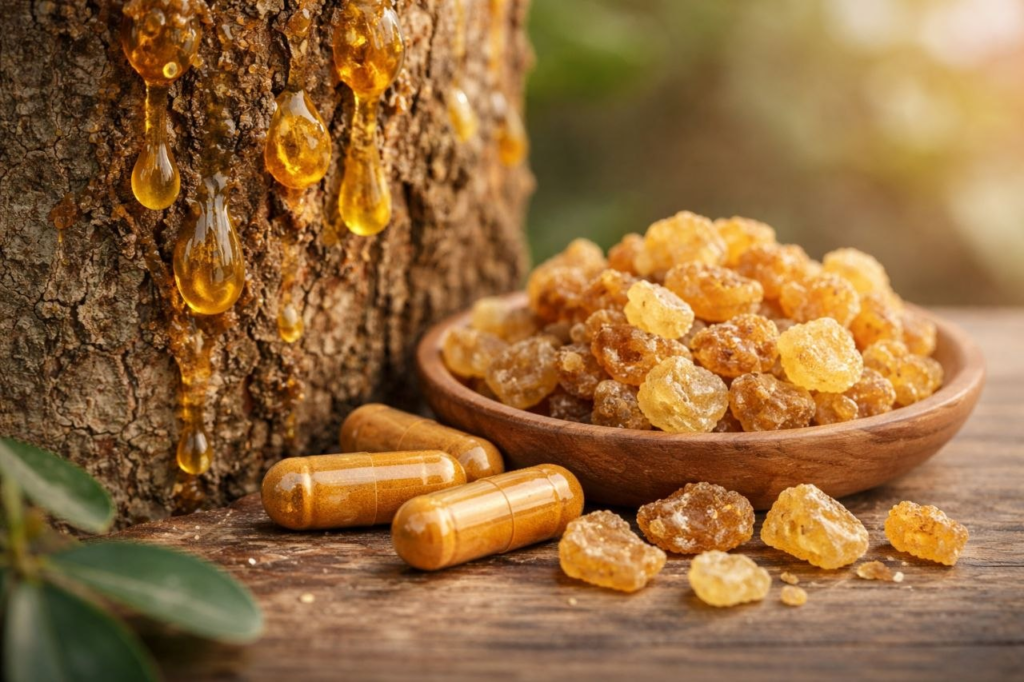
Boswellia serrata is a plant extract obtained from the resin of the Boswellia tree, commonly known as frankincense. It has been used for centuries in traditional medicine for inflammatory conditions.
The active compounds in Boswellia are called boswellic acids. These compounds are believed to influence inflammatory pathways in the body and may help reduce joint inflammation.
Modern research has focused on Boswellia as a natural alternative for managing conditions such as osteoarthritis due to its potential anti-inflammatory and pain-relieving effects. Today, boswellia for osteoarthritis is widely studied due to its potential anti-inflammatory and joint-support benefits.

How Boswellia May Help Reduce Joint Inflammation
Boswellia appears to reduce inflammation through multiple biological mechanisms.
Research suggests that boswellic acids may inhibit the enzyme 5-lipoxygenase (5-LOX), which is involved in the production of inflammatory molecules called leukotrienes.These molecules play a role in joint inflammation and pain.
By reducing leukotriene production, Boswellia may help decrease inflammation, swelling, and discomfort in affected joints.
In addition, Boswellia may help reduce the activity of inflammatory cytokines and support joint tissue health. This multi-targeted mechanism is one reason it is being studied as a natural approach to managing osteoarthritis symptoms.
Evidence From Clinical Studies
A systematic review and meta-analysis by Ganpeng Yu et al. BMC Complement Med Ther. 2020 analysed multiple randomized controlled trials evaluating the effects of Boswellia and its extracts in patients with osteoarthritis.
The analysis included several studies with a total of over 500 participants. Across these trials, Boswellia supplementation was associated with significant improvements in pain scores, stiffness, and physical function compared to control groups.
Many of the included studies used standardized Boswellia extracts at doses typically ranging from approximately 100 mg to 250 mg of boswellic acids per day, with treatment durations commonly between 4 and 12 weeks.
A systematic review published by Vishal Dubery et al 2024 on ScienceDirect supports the potential benefits of Boswellia in osteoarthritis management.
Results from these trials showed that participants receiving Boswellia experienced reductions in joint pain and improvements in mobility and daily function. Some studies also reported faster onset of action compared to placebo.
Overall, the meta-analysis concluded that Boswellia may be an effective and well-tolerated option for reducing symptoms of knee osteoarthritis, although variations in formulations and study design suggest that further research is needed.
Potential Benefits of Boswellia
Based on current research, Boswellia may offer several potential benefits for individuals with knee osteoarthritis.
One of the main benefits is reduction in joint pain. Clinical studies suggest that Boswellia supplementation may help decrease pain intensity during movement and daily activities.
Boswellia may also improve physical function, including walking ability and joint flexibility, which can enhance quality of life.
Another important benefit is its anti-inflammatory effect. By targeting inflammatory pathways, Boswellia may help reduce swelling and stiffness in the knee joint.
Additionally, Boswellia is generally well tolerated, with a relatively low risk of serious side effects when used in appropriate doses. Boswellia for osteoarthritis is commonly used to support joint function and reduce inflammation in daily life.
For detailed clinical evidence, see our boswellia for knee osteoarthritis clinical studies guide.
Limitations of Current Research
Despite promising results, there are several limitations in current research on Boswellia. Different studies use varying formulations, dosages, and durations, making it difficult to establish standardized recommendations.
Most clinical trials are relatively short-term, often lasting between 4 and 12 weeks. Long-term safety and effectiveness require further investigation. In addition, sample sizes in many studies are moderate, and larger trials are needed to confirm consistent results across different populations.
While Boswellia may help reduce symptoms, it does not reverse the underlying structural damage in osteoarthritis.
Conclusion
Knee osteoarthritis is a common condition that can significantly impact daily life.While conventional treatments are widely used, interest in natural compounds such as Boswellia has increased due to their potential anti-inflammatory effects.
Clinical evidence suggests that Boswellia supplementation may help reduce pain, improve joint function, and support mobility in individuals with osteoarthritis.
However, results may vary depending on formulation and dosage, and Boswellia should be considered as a supportive option rather than a replacement for medical treatment.
Individuals with persistent joint pain should consult a healthcare professional for proper evaluation and guidance. Overall, boswellia for osteoarthritis shows promising potential, although results may vary between individuals.
About the Moviva Research Team
The Moviva Research Team focuses on evidence-based wellness, nutrition, inflammation research, and natural health topics. Our goal is to simplify scientific research into practical, reader-friendly health information backed by published studies and clinical evidence.
We analyze human trials, animal studies, systematic reviews, meta-analyses, and emerging research adn sometimes traditional medicines uses related to arthritis, joint health, inflammation, nutrition, supplements, and lifestyle medicine to make science and experinece based articles for the public.
Medical Disclaimer
This article is for educational and informational purposes only and does not constitute medical advice. Always consult a qualified healthcare professional before making dietary or supplement changes, especially if you have arthritis or take medications.
References
Boswellia serrata extract for osteoarthritis: a systematic review and meta-analysis by Ganpeng Yu et al. BMC Complement Med Ther. 2020.
https://pmc.ncbi.nlm.nih.gov/articles/PMC7368679/
Vishal Dubery et al 2024
Evaluation of standardized Boswellia serrata extract in osteoarthritis – Systematic review and meta-analysis of human clinical trials
https://www.sciencedirect.com/science/article/abs/pii/S1550830724000090