Curcumin vs Boswellia for Knee Osteoarthritis (2026): Proven Best Choice for Pain Relief
Introduction
Curcumin vs boswellia for knee osteoarthritis is one of the most important and widely searched comparisons for people looking for natural, effective joint pain relief. If you’re struggling with stiffness, inflammation, or reduced mobility, choosing the right supplement can make a real difference in your daily life.
Both curcumin and boswellia are powerful, research-backed natural compounds known for their strong anti-inflammatory and joint-supporting effects. But which one actually works better for knee osteoarthritis?
In this evidence-based guide, we break down how curcumin and boswellia work, compare clinical research, and help you discover which option may provide faster relief, better mobility, and long-term joint support.
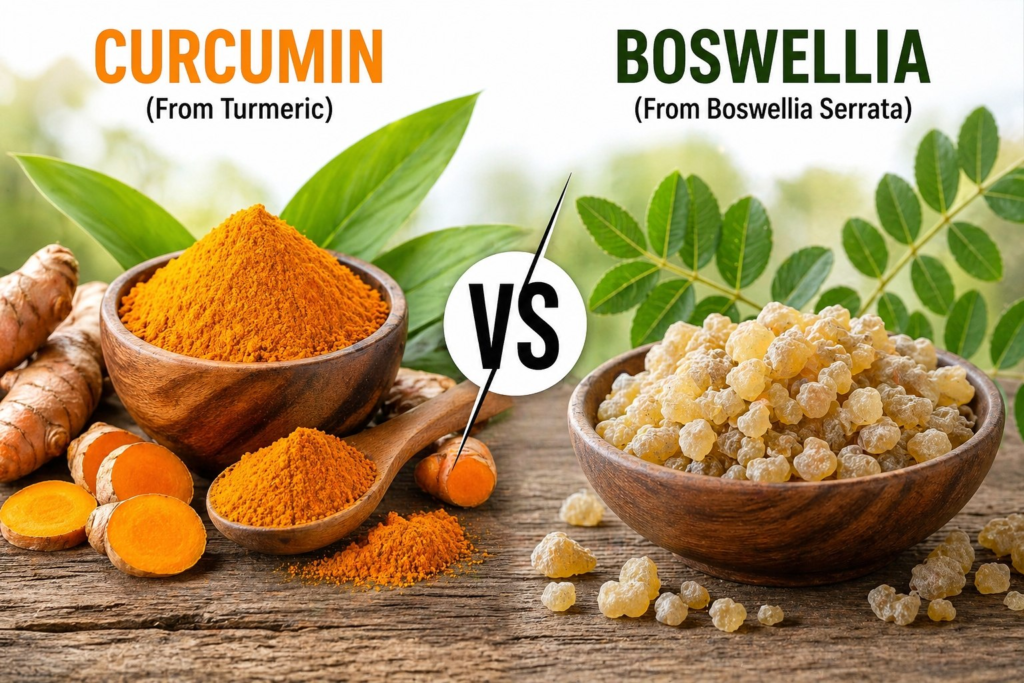
What Is Curcumin?
Curcumin is the primary active compound found in turmeric. It is known for its anti-inflammatory and antioxidant properties.
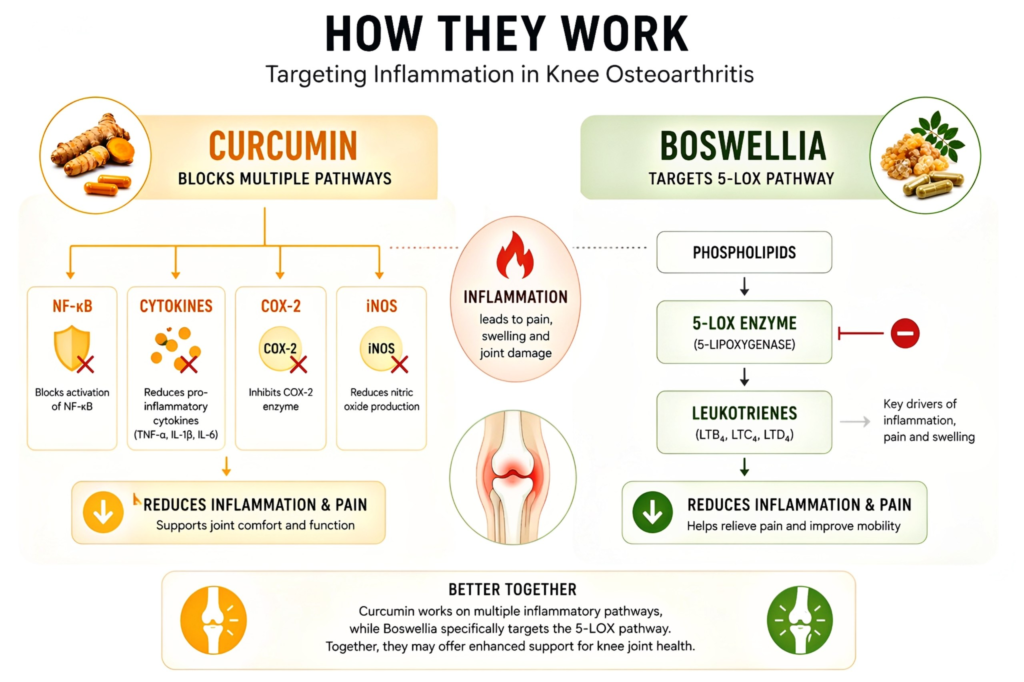
It works on multiple inflammatory pathways, including cytokines and NF-κB signaling. However, curcumin has low natural bioavailability, which is why it is often combined with piperine or formulated for better absorption.
For indepth article read our detailed guide on curcumin for knee osteoarthritis.
What Is Boswellia?
Boswellia serrata, also known as Indian frankincense, is a plant extract rich in boswellic acids.
These compounds help reduce inflammation by inhibiting the 5-lipoxygenase (5-LOX) enzyme, which plays a key role in producing inflammatory molecules.
For a deeper understanding, read our detailed guide on boswellia for knee osteoarthritis.
Mechanism Comparison
Curcumin vs Boswellia for Knee Osteoarthritis: Key Differences
When comparing curcumin vs boswellia for knee osteoarthritis, both work through different anti-inflammatory pathways. While curcumin works broadly by reducing inflammatory cytokines and oxidative stress, boswellia specifically targets leukotriene pathways, which are directly involved in joint inflammation and pain.
Here is a quick comparison of curcumin vs boswellia for knee osteoarthritis based on mechanism, effectiveness, and clinical use:
Curcumin vs Boswellia for Knee Osteoarthritis (Comparison Table)
| Feature | Curcumin | Boswellia |
| Primary Benefit | Reduces inflammation | Improves joint function |
| Speed of Relief | Moderate | Faster |
| Pain Reduction | Strong | Moderate to strong |
| Mechanism | NF-kB inhibition | 5-LOX inhibition |
| Best For | Chronic inflammation | Stiffness & mobility |
| Combination Use | Works well with boswellia | Works well with curcumin |
This comparison table of curcumin vs boswellia for knee osteoarthritis helps you quickly understand which supplement may be more effective for pain, inflammation, and joint mobility
Curcumin
Targets multiple inflammatory pathways
Reduces cytokines and oxidative stress
Broad anti-inflammatory action
Clinical trials show that curcumin supplementation can reduce knee pain and improve physical function, with effects comparable to some NSAIDs in certain studies.
Boswellia
Inhibits 5-LOX enzyme
Reduces leukotriene production
More targeted anti-inflammatory effect
Some meta-analyses suggest that boswellia may have a stronger effect on improving joint stiffness and function, especially in moderate osteoarthritis cases
In simple terms:
Curcumin works broadly, while Boswellia acts more specifically.
Clinical Evidence with Dosage Insights
Curcumin (Selected Studies)
Kuptniratsaikul et al. (2014)
Dose: ~1500 mg/day
Result: Comparable pain relief to ibuprofen with fewer side effects
Daily et al. (2016, Meta-analysis)
Dose range: 500–1500 mg/day
Result: Significant reduction in pain and improved function
Chandran (2012, India & USA, 24)
Dose: ~1000 mg/day + piperine
Result: Reduced inflammation and symptom severity
Boswellia (Selected Studies)
Sengupta et al 2010 (5-Loxin/Aflapin)
Dose: ~100–250 mg/day
Result: Improved WOMAC scores and reduced stiffness
Majeed et al 2024.
Dose: 300–600 mg/day
Result: Improved mobility and reduced joint pain
Yu et al. (2020, Meta-analysis)
Dose range: varies (~100–500 mg/day)
Result: Overall improvement in osteoarthritis symptoms
Results may vary depending on formulation, dosage, and duration of use.
Effectiveness Comparison
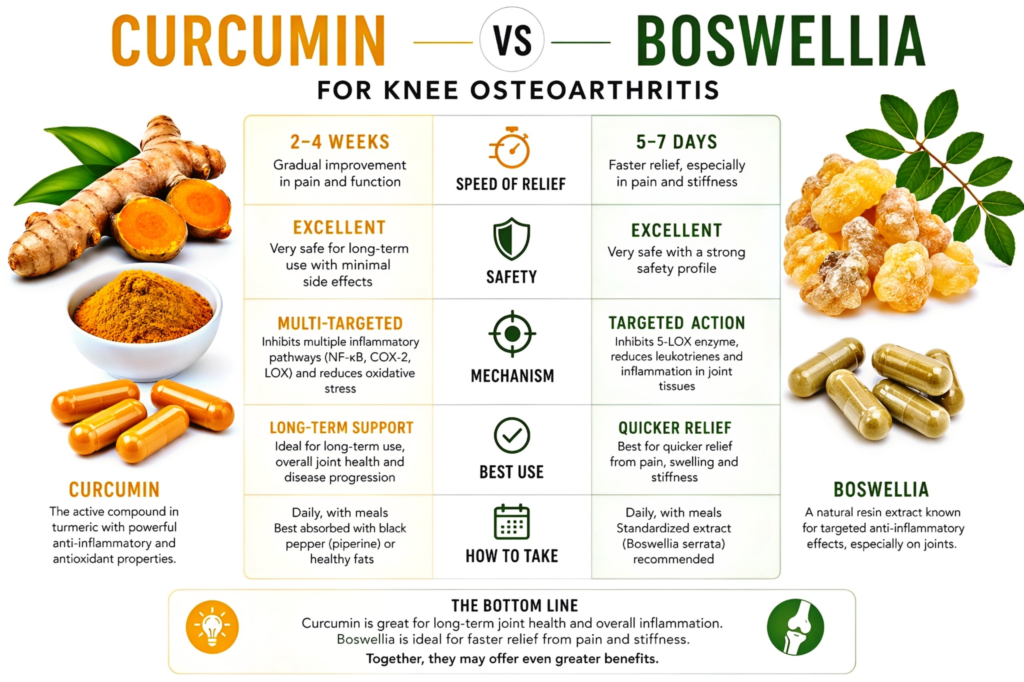
Studies on curcumin vs boswellia for knee osteoarthritis suggest both can reduce pain, but boswellia may act faster in some cases.
Pain Relief
Curcumin: Gradual, consistent improvement
Boswellia: Often faster anti-inflammatory response
Mobility and Function
Both improve joint function and mobility
Curcumin may support long-term joint health
Boswellia may provide quicker symptom relief
Inflammation Reduction
Curcumin: Broad anti-inflammatory action
Boswellia: Strong targeted effect on inflammatory pathways
Safety Comparison
Curcumin
Generally very safe
Minimal side effects
Main limitation: low absorption
Boswellia
Generally well tolerated
Mild digestive discomfort in some individuals
Compared to NSAIDs, both options have a better safety profile for long-term use.
Which One Should You Choose?
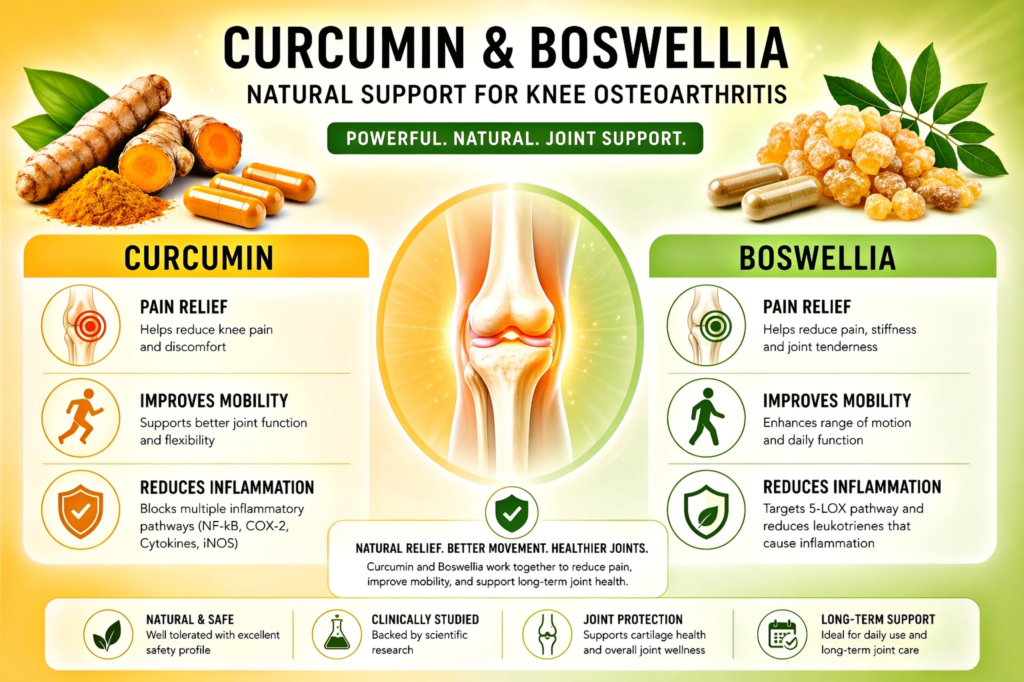
Choose Curcumin if:
You want long-term joint support
You prefer a broad anti-inflammatory effect
You are targeting overall inflammation
Choose Boswellia if:
You want faster relief from inflammation
You have moderate joint stiffness or pain
You prefer a targeted anti-inflammatory approach
Consider both for stronger pain relief if:
You want combined effects
You want comprehensive joint support
You are looking for comprehensive joint support Curcumin and Boswellia may work even better when combined, as some studies suggest a synergistic effect that improves pain and joint function compared to using either alone.
(Haroyan et al., BMC Complement Altern Med, 2018)
Conclusion
Curcumin and Boswellia are both well-researched natural options for managing knee osteoarthritis symptoms. While curcumin is particularly effective for reducing inflammation and pain over time, boswellia may provide faster relief in joint stiffness and mobility.
Rather than choosing one over the other, current evidence suggests that combining curcumin and boswellia may offer more comprehensive benefits by targeting multiple inflammatory pathways.
Ultimately, the best choice depends on your specific needs—whether you prioritize long-term inflammation control, faster symptom relief, or a combination of both for optimal joint support.
Frequently Asked Questions
Q1. Which is better, curcumin or boswellia for knee osteoarthritis?
When comparing curcumin vs boswellia for knee osteoarthritis, both supplements help reduce inflammation and pain.
Q2. Can I take curcumin and boswellia together?
Yes and you should as combining curcumin and boswellia may provide better results because they work through different anti-inflammatory pathways, making them complementary.
Q3. Which works faster for knee pain relief?
Boswellia is often reported to act faster for reducing stiffness and pain, while curcumin may take longer but supports long-term inflammation control.
Q4. How long does it take to see results?
Most people may start noticing improvements within 2 to 8 weeks, depending on dosage, supplement quality, and severity of symptoms.
Q5. Are curcumin and boswellia safe for long-term use?
Both are generally considered safe when taken in recommended doses, but it is advisable to consult a healthcare professional, especially for long-term use.
Q6. What is the best dosage for curcumin and boswellia?
Curcumin is commonly used in doses of 500–1000 mg per day (with enhanced absorption), while boswellia is typically taken at 300–500 mg two to three times daily.
About the Moviva Research Team
The Moviva Research Team focuses on evidence-based wellness, nutrition, inflammation research, and natural health topics. Our goal is to simplify scientific research into practical, reader-friendly health information backed by published studies and clinical evidence.
We analyze human trials, animal studies, systematic reviews, meta-analyses, and emerging research adn sometimes traditional medicines uses related to arthritis, joint health, inflammation, nutrition, supplements, and lifestyle medicine to make science and experinece based articles for the public.
Medical Disclaimer
This article is for educational and informational purposes only and does not constitute medical advice. Always consult a qualified healthcare professional before making dietary or supplement changes, especially if you have arthritis or take medications.
References
Kuptniratsaikul et al 2014 Curcumin vs Ibuprofen Study
https://pubmed.ncbi.nlm.nih.gov/24672232/
Daily et al 2016 Meta-analysis
https://pubmed.ncbi.nlm.nih.gov/27533649/
Panahi et al 2014 IRAN., Curcumin Study
https://pmc.ncbi.nlm.nih.gov/articles/PMC5003001/
Sengupta et al 2014., Boswellia Study
https://pmc.ncbi.nlm.nih.gov/articles/PMC4175880/
Majeed et al 2014, Boswellia Study
https://pmc.ncbi.nlm.nih.gov/articles/PMC6681146/
Yu et al., Boswellia 2020 Meta-analysis
https://pubmed.ncbi.nlm.nih.gov/32680575/
Armine Haroyan et al. BMC Complement Altern Med. 2018.
https://pmc.ncbi.nlm.nih.gov/articles/PMC5761198/