
Curcumin for Knee Osteoarthritis: What Clinical Studies Really Show
Introduction
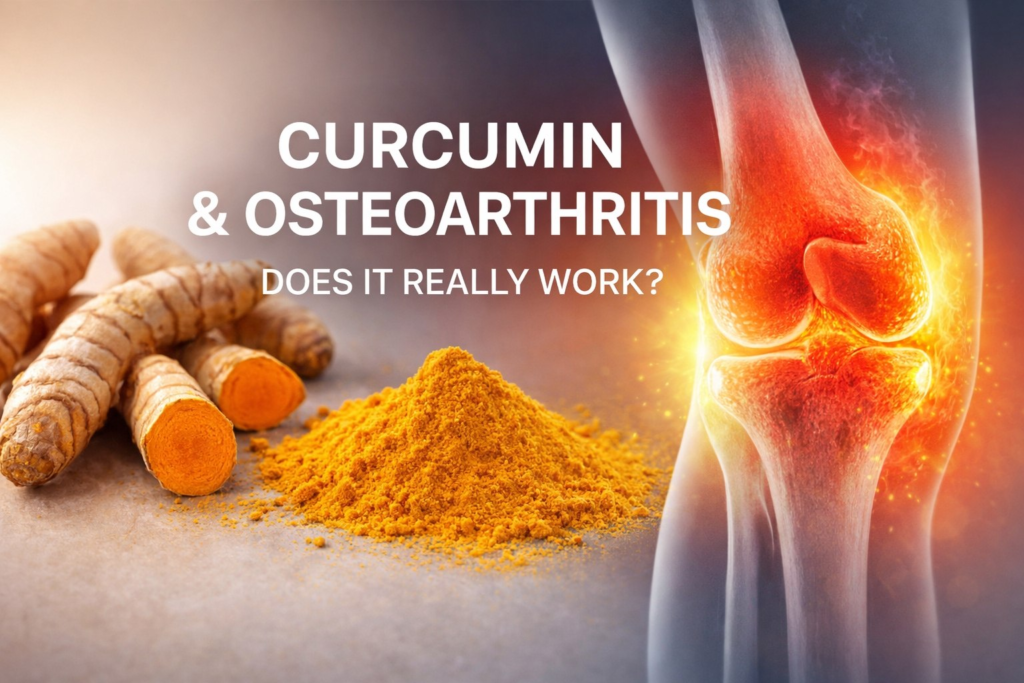
Curcumin for knee osteoarthritis has gained significant attention as a natural, research-backed option for reducing joint pain and inflammation. If you’re dealing with stiffness, swelling, or reduced mobility, understanding what clinical studies actually show can help you make a more informed decision.
Recent clinical trials and meta-analyses suggest that curcumin may significantly reduce knee pain and improve physical function compared to placebo, making it one of the most studied natural compounds for osteoarthritis. Thats why curcumin has gained attention as a natural option for joint pain.
You can also read about another new herb Boswellia in our Boswellia guide for osteoarthritis what clinical trials say in this article
Understanding Knee Osteoarthritis
Knee osteoarthritis occurs when cartilage gradually wears down, leading to:
Joint pain
Stiffness
Inflammation
Reduced mobility
It is especially common in older adults and individuals with obesity, injury, or repetitive joint stress.
What Is Curcumin?
Curcumin is a natural polyphenol responsible for the yellow color of turmeric.
It has been extensively studied for:
Anti-inflammatory effects
Antioxidant activity
Joint health support
However, one important limitation is low bioavailability, meaning it is often combined with absorption enhancers like piperine.
How Curcumin May Reduce Joint Inflammation
Curcumin works by targeting multiple inflammatory pathways:
Inhibits inflammatory cytokines
Suppresses NF-κB signaling
Reduces oxidative stress (ROS)
These actions may help:
Decrease joint inflammation
Protect cartilage
Improve overall joint function
What Clinical Studies Really Show
Several randomized controlled trials and meta-analyses have evaluated curcumin for knee osteoarthritis, with consistent findings across studies.
Clinical trials show that curcumin significantly reduces knee pain and improves physical function compared to placebo. In many cases, these improvements are measured using validated scales such as WOMAC and VAS scores, which assess pain, stiffness, and mobility.
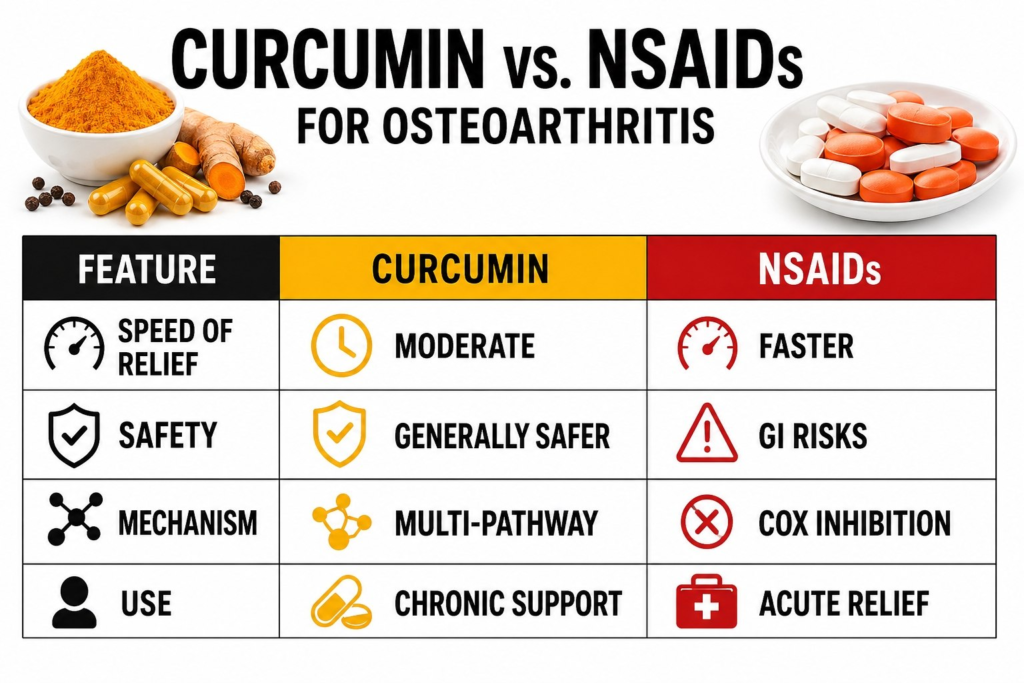
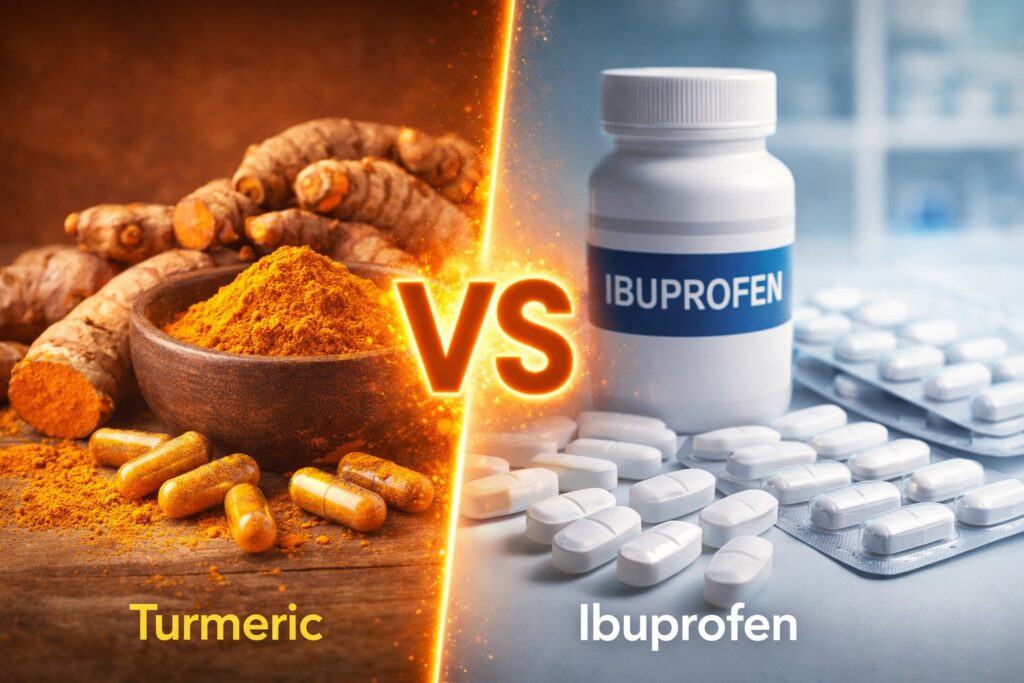
Meta-analyses further confirm that turmeric and curcumin extracts can provide meaningful symptom relief, with some studies reporting effects comparable to NSAIDs but with fewer side effects.
A recent network meta-analysis (2024) also concluded that curcumin demonstrates good clinical efficacy and safety, both as a standalone treatment and when combined with other therapies.
Key Findings Across Studies:
•Significant reduction in pain (VAS, WOMAC scores)
•Improvement in joint stiffness and mobility
•Better functional outcomes in daily activities
•Comparable effectiveness to NSAIDs in some trials
•Generally well tolerated with fewer adverse effects
So many studies on curcumin for knee osteoarthritis highlight its ability to reduce inflammation while improving joint function over time. Overall, current evidence suggests that curcumin for knee osteoarthritis provides moderate to strong benefits, particularly in inflammation-driven joint pain.

Curcumin Clinical Trials (Summary)
Many studies show that curcumin for knee osteoarthritis can help reduce inflammation and improve mobility. Here are some important studies.
Study 1 – Kuptniratsaikul et al. (2014)
Age Group: 45–75 years
Intervention: Curcumin 1500 mg/day
Comparator: Ibuprofen 1200 mg/day
K-L Grade: II–III
Result: Similar pain relief to ibuprofen with fewer side effects
Study 2 – Panahi et al. (2014)
Age Group: 40–70 years
Intervention: Curcumin 1000 mg/day + piperine
Comparator: Placebo
K-L Grade: II–III
Result: Reduced inflammatory markers and pain
Study 3 – Belcaro et al. (2010)
Age Group: 45–75 years
Intervention: Curcumin phytosome 1000 mg/day
Comparator: Standard management
K-L Grade: II–III
Result: Improved mobility and reduced pain
Study 4 – Henrotin et al. (2014)
Age Group: 50–80 years
Intervention: Curcumin extract (low vs high dose)
Comparator: Placebo
K-L Grade: II–III
Result: Both doses improved knee pain
Study 5 – Nakagawa et al. (2014)
Age Group: 50–75 years
Intervention: Bioavailable curcumin 180 mg/day
Comparator: Placebo
K-L Grade: II–III
Result: Significant reduction in knee pain
Study 6 – Madhu et al. (2013)
Age Group: 40–70 years
Intervention: Curcumin 1500 mg/day
Comparator: Diclofenac 100 mg/day
K-L Grade: II–III
Result: Comparable pain relief with better safety
Study 7 – Chandran et al. (2012)
Age Group: 40–65 years
Intervention: Curcumin 500 mg/day
Comparator: Diclofenac
K-L Grade: II–III
Result: Similar efficacy with fewer GI side effects
Study 8 – Amalraj et al. (2017)
Age Group: 40–70 years
Intervention: Bioavailable curcumin 500 mg/day
Comparator: Placebo
K-L Grade: II–III
Result: Improved WOMAC scores
Study 9 – Di Pierro et al. (2013)
Age Group: 50–75 years
Intervention: Curcumin phytosome
Comparator: NSAIDs
K-L Grade: II–III
Result: Reduced need for pain medications
Study 10 – Haroyan et al. (2018)
Age Group: 45–75 years
Intervention: Curcumin combination formula
Comparator: Placebo
K-L Grade: II–III
Result: Reduced stiffness and improved function
Study 11 – Kizhakkeveetil et al. (2016)
Age Group: 40–65 years
Intervention: Curcumin supplement
Comparator: Placebo
K-L Grade: II–III
Result: Improved joint function
Study 12 – Pinsornsak et al. (2012)
Age Group: 50–75 years
Intervention: Curcumin extract
Comparator: Ibuprofen
K-L Grade: II–III
Result: Comparable pain reduction
Overall, curcumin for knee osteoarthritis demonstrates consistent benefits across multiple clinical trials.
Note
Kellgren-Lawrence (K-L) Grade Explained
Grade I–II: Early osteoarthritis with mild cartilage changes
Grade II–III: Moderate osteoarthritis (most clinical trials focus here)
Grade IV: Severe joint damage and significant loss of cartilage
Most curcumin studies focus on moderate osteoarthritis (Grade II–III)
VAS (Visual Analog Scale):
A pain measurement scale from 0 to 10, where 0 means no pain and 10 means severe pain.
WOMAC Score (Western Ontario and McMaster Universities Osteoarthritis Index):
A widely used clinical tool to assess:
Pain
Stiffness
Physical function in knee osteoarthritis patients
Higher scores indicate worse symptoms.
Summary of Meta-analysis
Curcumin effective and safe for knee OA
Works alone or with other treatments
Systematic review (29 RCTs)
120–1500 mg doses
Duration: 4–36 weeks
Result: Reduced inflammation and pain
RCT-based reviews
Improved pain and physical function
No major safety concerns
Older meta-analysis
Similar effectiveness to ibuprofen/diclofenac
Reduced arthritis symptoms
Potential Benefits of Curcumin
Based on clinical evidence, curcumin may:
Reduce joint pain
Improve mobility and function
Decrease inflammation
Provide antioxidant protection
Offer a safer alternative to long-term NSAID use
Studies suggest comparable pain relief with fewer side effect
Limitations of Current Research
Low bioavailability of curcumin
Variability in formulations
Moderate sample sizes
Short study durations
More large-scale trials are still needed
Conclusion
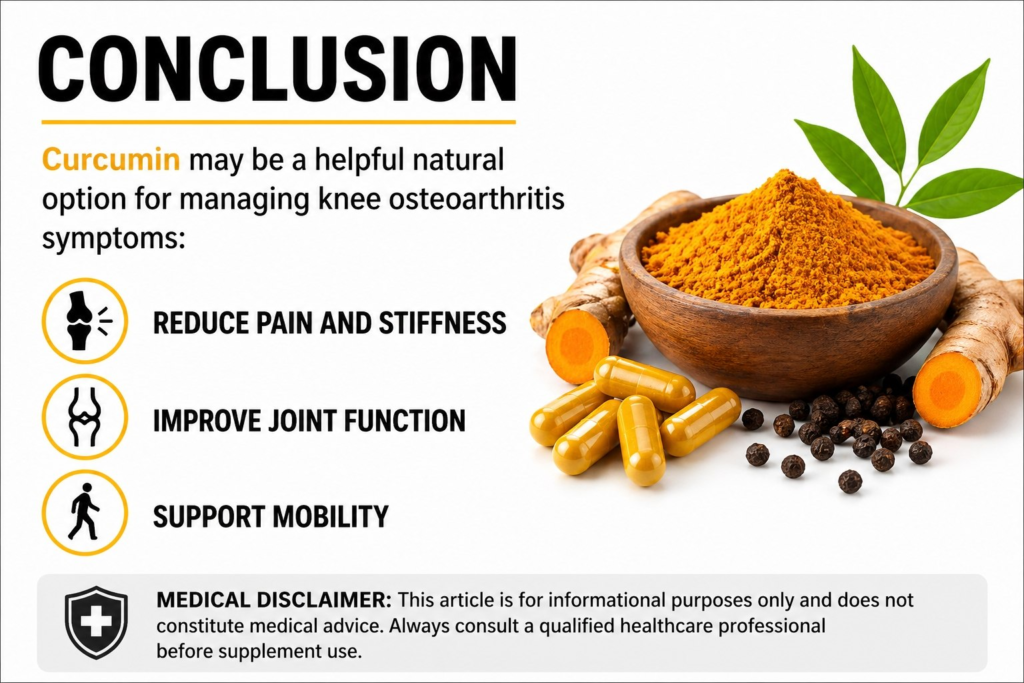
Curcumin for knee osteoarthritis appears to be a safe and effective natural option for long-term joint support.
It may:
Reduce pain
Improve joint function
Support mobility
However, it should be considered a supportive therapy, not a cure.
About the Moviva Research Team
The Moviva Research Team focuses on evidence-based wellness, nutrition, inflammation research, and natural health topics. Our goal is to simplify scientific research into practical, reader-friendly health information backed by published studies and clinical evidence.
We analyze human trials, animal studies, systematic reviews, meta-analyses, and emerging research adn sometimes traditional medicines uses related to arthritis, joint health, inflammation, nutrition, supplements, and lifestyle medicine to make science and experinece based articles for the public.
Medical Disclaimer
This article is for educational and informational purposes only and does not constitute medical advice. Always consult a qualified healthcare professional before making dietary or supplement changes, especially if you have arthritis or take medications.
References
Zhao et al. (2024) – Network Meta-Analysis
Multiple RCT-based meta-analyses on curcumin and osteoarthritis.
https://www.sciencedirect.com/science/article/pii/S0378874123013636
Pingback: Boswellia for Knee Osteoarthritis: What Clinical Studies Show – Moviva Health