Introduction
The best herbs for rheumatoid arthritis are becoming powerful, natural tools for people struggling with constant joint pain, stiffness, and inflammation. If you’re tired of relying only on medications or looking for additional support, evidence-based herbs may offer real relief.
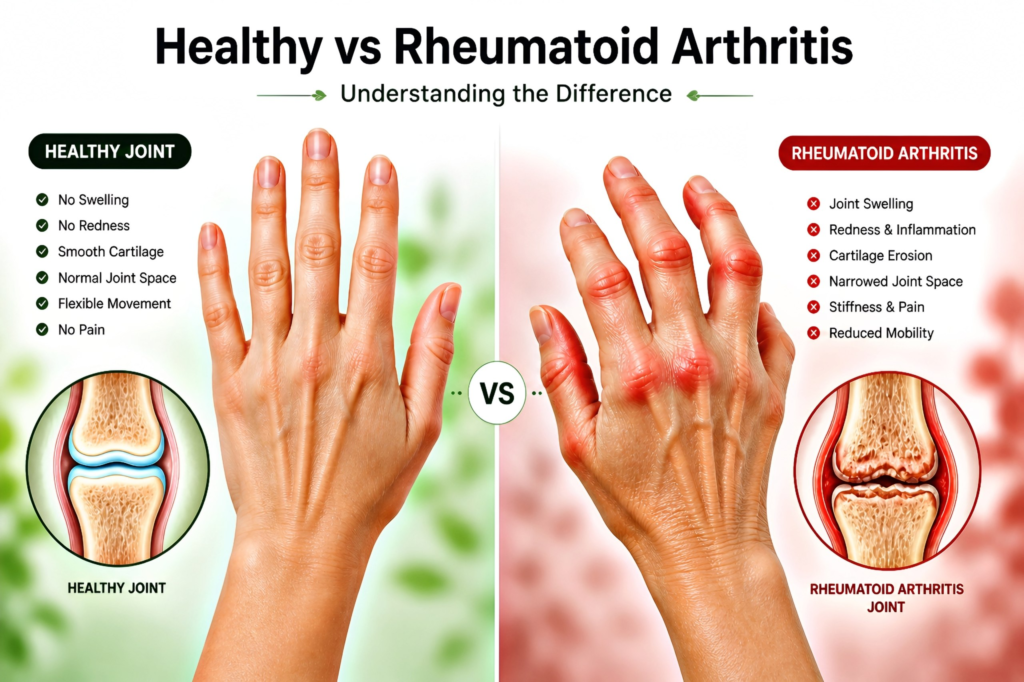
Rheumatoid arthritis (RA) is a chronic autoimmune condition where the immune system attacks the joints, causing inflammation, swelling, and long-term damage. Because inflammation is the root cause, natural compounds with anti-inflammatory and immune-modulating effects are gaining serious attention.
All recommendations in this guide are based on clinical trials, systematic reviews, and peer-reviewed research.
How We Selected These Herbs
The herbs in this guide were carefully selected based on:
•Clinical trials and meta-analyses
•Proven anti-inflammatory mechanisms
•Traditional use in arthritis management
•Safety and availability
Additionally, plant compounds such as curcumin, boswellic acids, and polyphenols have been widely studied for their effects on inflammation and immune regulation in arthritis-related conditions.
How Herbs May Help Rheumatoid Arthritis
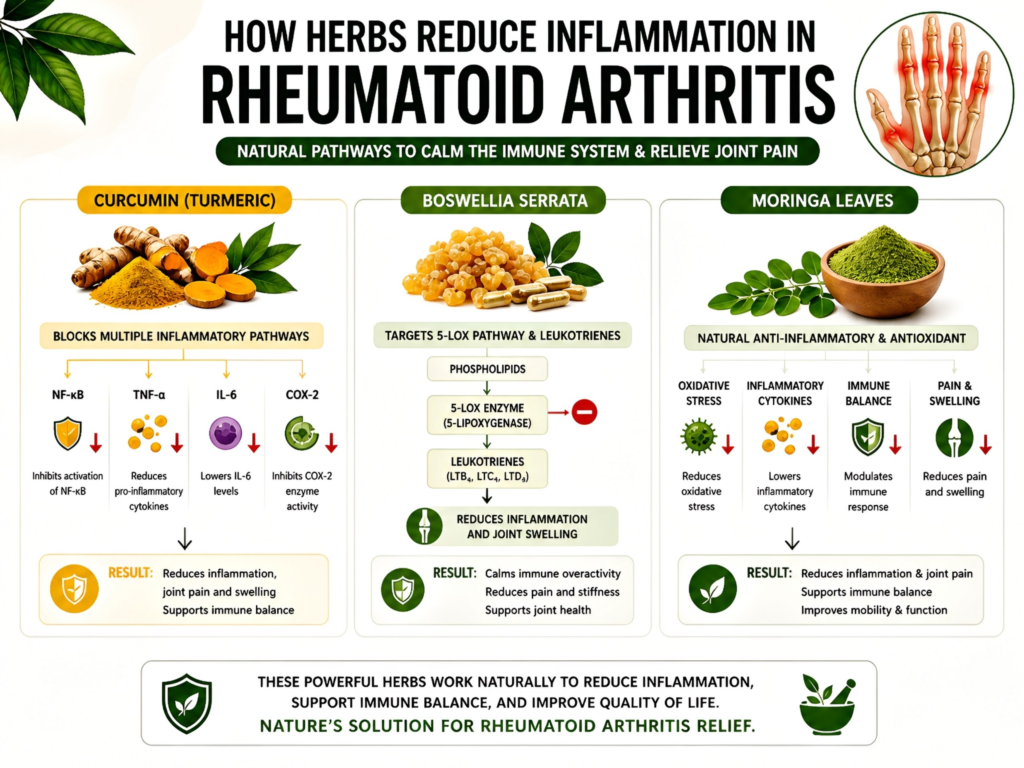
These herbs work through multiple biological pathways:
•Suppression of inflammatory signals like NF-κB
•Reduction of cytokines such as TNF-α and IL-6
•Antioxidant effects that reduce joint damage
•Modulation of immune system activity
Clinical evidence also supports combined herbal approaches. In a randomized, double-blind, placebo-controlled trial, a formulation containing ginger, Boswellia, curcumin, and ashwagandha improved joint swelling and disease activity in RA patients.
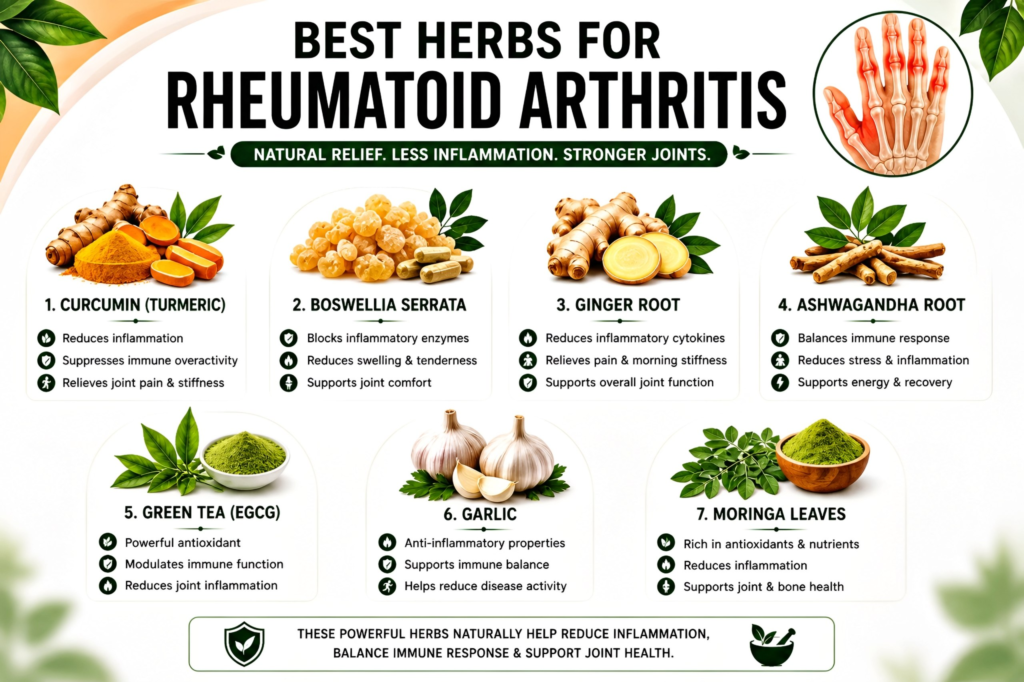
7 Best Herbs for Rheumatoid Arthritis
1. Curcumin (Turmeric)
Curcumin is one of the best herbs for rheumatoid arthritis due to its strong anti-inflammatory and immune-modulating properties supported by clinical research.
Mechanism of Action
•Inhibits NF-κB signaling pathway
•Reduces pro-inflammatory cytokines (TNF-α, IL-6)
•Acts as a powerful antioxidant
•Helps regulate immune system overactivity
Benefits
•Reduces inflammation
•Improves joint pain and stiffness
•Lowers disease activity
Traditional Use
Used in Ayurvedic medicine for centuries to treat inflammation, joint disorders, and chronic pain conditions.
What Research Shows
Multiple systematic reviews and meta-analyses show that curcumin significantly improves joint pain, stiffness, and inflammatory markers in rheumatoid arthritis patients.
A systematic review by Yihuan Fan et al 2025 found that curcumin has a significant therapeutic effect in rheumatoid arthritis.
A meta-analysis of placebo-controlled randomized clinical trials by Jan Yihua Fan et 2026 confirmed that curcumin improves symptoms and reduces inflammation in RA patients.
For detailed breakdown check our article on curcumin for rheumatoid arthritis what clinical studies show
Typical Dose
500–1000 mg per day (standard extract)
Lower doses required with enhanced bioavailability (with piperine)
2. Boswellia Serrata
Boswellia is one of the best herbs for rheumatoid arthritis due to its ability to reduce inflammation through leukotriene inhibition.
Mechanism of Action
•Inhibits 5-lipoxygenase (5-LOX) enzyme
•Reduces leukotriene-mediated inflammation
•Lowers inflammatory markers like TNF-α (in studies)
Benefits
•May reduce joint swelling
•Supports joint function
Evidence in RA is still limited, but preclinical studies show reduction in inflammatory markers like TNF-α.
Traditional Use
Widely used in Ayurvedic medicine for arthritis, inflammatory conditions, and joint pain.
What Research Shows
Preclinical and animal studies show significant anti-inflammatory effects. However, human clinical trials specifically in rheumatoid arthritis are still limited.
3. Ginger
Ginger is one of the best herbs for rheumatoid arthritis due to its natural anti-inflammatory compounds that may help reduce pain and stiffness
Mechanism of Action
•Inhibits COX and LOX pathways
•Reduces prostaglandin production
•Contains gingerols with anti-inflammatory effects
Benefits
•Reduces pain
•Improves mobility
Traditional Use
Used in traditional medicine for pain relief, digestion, and inflammatory conditions.
What Research Shows
Studies suggest ginger may help reduce joint pain and stiffness in inflammatory conditions, including arthritis.
Typical Dose
1–3 grams 1-2 times per day of powder or 125 – 500mg 1-2 times extract per day
4. Ashwagandha
Ashwagandha is also one of the best herbs for rheumatoid arthritis due to its immune-modulating and adaptogenic properties.
Mechanism of Action
•Modulates immune system activity
•Reduces stress-related inflammation
•Contains withanolides with anti-inflammatory effects
Benefits
•Supports immune balance
•May reduce autoimmune response
Traditional Use
Used in Ayurveda to support strength, immunity, and overall health.
What Research Shows
Limited RA-specific studies, but research supports its role in reducing inflammation and improving immune balance.
Typical Dose
300–600 mg extract daily
5. Moringa
Moringa is one of the best herbs for rheumatoid arthritis due to its high antioxidant and anti-inflammatory content.
Mechanism of Action
•Reduces oxidative stress
•Modulates inflammatory pathways
•Contains polyphenols and flavonoids
•Rich in antioxidants and bioactive compounds.
Benefits
•Reduces inflammation
•Supports joint health
Traditional Use
Used as a functional food and medicinal plant in traditional systems.
What Research Shows
Recent reviews suggest moringa has strong anti-inflammatory potential and may support arthritis management.
A 2026 review published on mdpi highlights moringa as a promising and strong anti-inflammatory agent in rheumatoid arthritis.
Typical Dose
1000–2000 mg powder or 250-750mg extract 1-2 times daily
6. Garlic
Garlic is one of the best herbs for rheumatoid arthritis due to its natural anti microbial sulfur compounds that support immune and inflammatory balance.
Mechanism of Action
•Reduces inflammatory signaling
•Contains allicin and sulfur compounds
•Supports immune modulation
Benefits
•Supports immune system
•Helps reduce inflammation
•Reduces inflammation caused by parasites
Traditional Use
Used for cardiovascular health, immunity, and inflammation.
What Research Shows
Some studies suggest garlic may help reduce inflammation and improve immune function.
Typical Dose
600–1200 mg aged garlic extract daily
7. Green Tea (EGCG)
Green tea is one of the best herbs for rheumatoid arthritis due to its powerful antioxidant and anti-inflammatory compound EGCG.
Mechanism
•Reduces oxidative stress
•Modulates immune response
•Inhibits inflammatory pathways
Benefits
Protects joints
Supports overall health
Traditional Use
Consumed widely for health, longevity, and disease prevention.
What Research Shows
Research suggests green tea may help reduce inflammation and protect joint tissues. Search Assist
Green tea catechins, particularly epigallocatechin-3-gallate (EGCG), have shown promising anti-inflammatory properties that may help in managing rheumatoid arthritis symptoms as per 2025 reveiw of green tea catechins in the context of Rheumatoid Arthritis.
Typical Dose
2–3 cups daily or 300–500 mg EGCG extract
Best Herbs for Rheumatoid Arthritis: Quick Comparison Summary
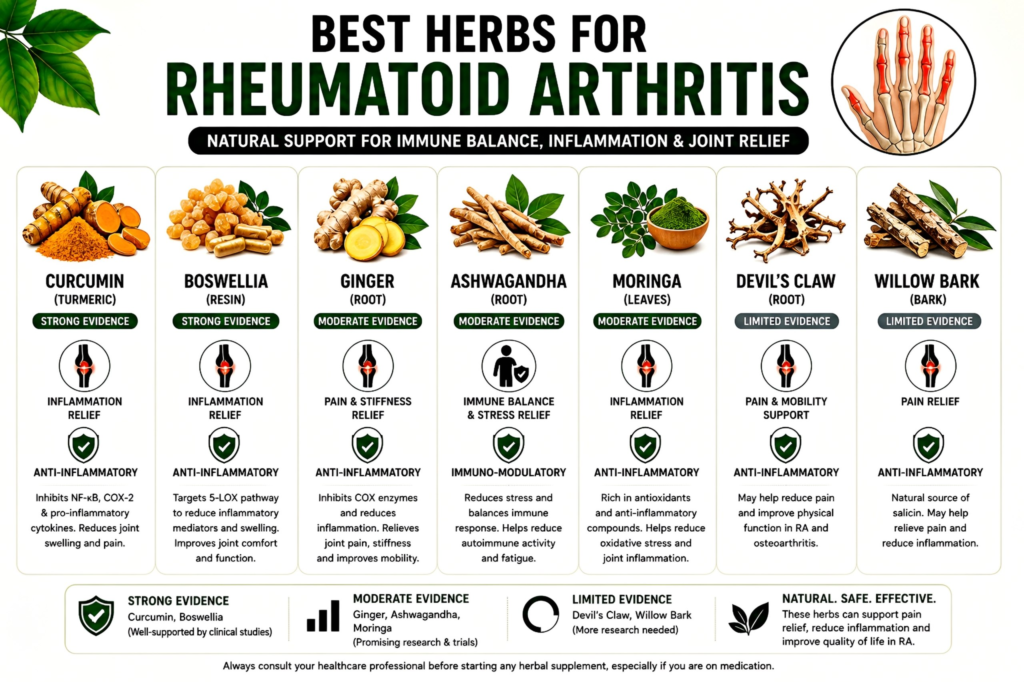
Best overall (strongest evidence): Curcumin
Best for immune balance: Ashwagandha
Best antioxidant support: Green tea
Best traditional anti-inflammatory: Boswellia
Emerging powerful option: Moringa
Limitations of Current Research
Despite promising results:
•Large human trials are still limited
•Herbal formulations vary
•Short-term studies dominate
These herbs should be used as supportive therapies, not replacements for medical treatment.
Conclusion
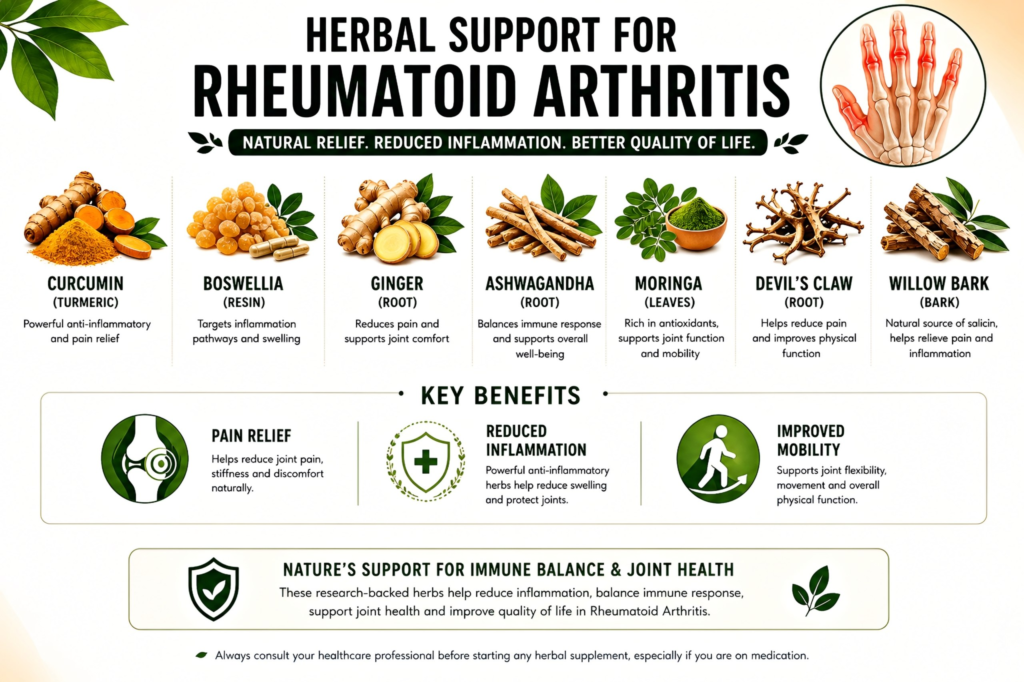
The best herbs for rheumatoid arthritis provide a strong, evidence-based approach to managing inflammation and joint pain naturally. Among them, curcumin stands out with the strongest clinical backing.
Other herbs like ginger, ashwagandha, and green tea offer additional benefits, while moringa shows promising emerging evidence. When used correctly, these herbs can support rheumatoid arthritis management alongside proper medical care.
About the Moviva Research Team
The Moviva Research Team focuses on evidence-based wellness, nutrition, inflammation research, and natural health topics. Our goal is to simplify scientific research into practical, reader-friendly health information backed by published studies and clinical evidence.
We analyze human trials, animal studies, systematic reviews, meta-analyses, and emerging research adn sometimes traditional medicines uses related to arthritis, joint health, inflammation, nutrition, supplements, and lifestyle medicine to make science and experinece based articles for the public.
Medical Disclaimer
This article is for educational and informational purposes only and does not constitute medical advice. Always consult a qualified healthcare professional before making dietary or supplement changes, especially if you have arthritis or take medications.
References
Curcumin for the clinical treatment of rheumatoid arthritis: systematic review and meta-analysis
https://pmc.ncbi.nlm.nih.gov/articles/PMC12832973/
Effect of curcumin on rheumatoid arthritis: meta-analysis
https://www.frontiersin.org/journals/immunology/articles/10.3389/fimmu.2023.1121655/full
Moringa as a functional food for rheumatoid arthritis (review)
https://www.mdpi.com/2227-9059/14/3/565
List of anti-arthritic plants and phytoconstituents
https://pmc.ncbi.nlm.nih.gov/articles/PMC11136810/
Effect of Boswellia Serrata on inflammatory markers (animal study)
https://pmc.ncbi.nlm.nih.gov/articles/PMC6477955/
A Reveiw of green tea catechins in the context of Rheumatoid Arthritis.
https://www.mdpi.com/2076-3417/15/24/13176