12 Best Supplement for Knee Osteoarthritis (2026 Evidence-Based Guide – Human Clinical Trials)
Published: April 24, 2026
Last Updated: April 24, 2026
Introduction to Best Supplements for Knee Osteoarthritis 2026
Knee osteoarthritis is one of the most common causes of joint pain, stiffness, and reduced mobility. Many people turn to natural supplements to reduce inflammation and support joint health.
The best supplements for knee osteoarthritis can help reduce pain, inflammation, and improve joint function when supported by clinical evidence.
In this guide, we review the best supplements for knee osteoarthritis in 2026, including turmeric (curcumin), boswellia, and moringa, and explain which ones actually work based on available research.
Knee osteoarthritis is one of the most common causes of joint pain, stiffness, and reduced mobility. While painkillers like NSAIDs provide temporary relief, many people are now turning to natural supplements that support long-term joint health.
If you are also exploring joint support options for RA, read:
Also check: Best Supplements for Rheumatoid Arthritis Evidence-Based Guide
This guide is strictly based on randomised human clinical trials, ensuring that all recommendations are grounded in solid scientific evidence. This makes it a rare evidence-based article focused exclusively on randomized controlled trials (RCTs), considered the gold standard in clinical research.
How Supplements May Help Osteoarthritis
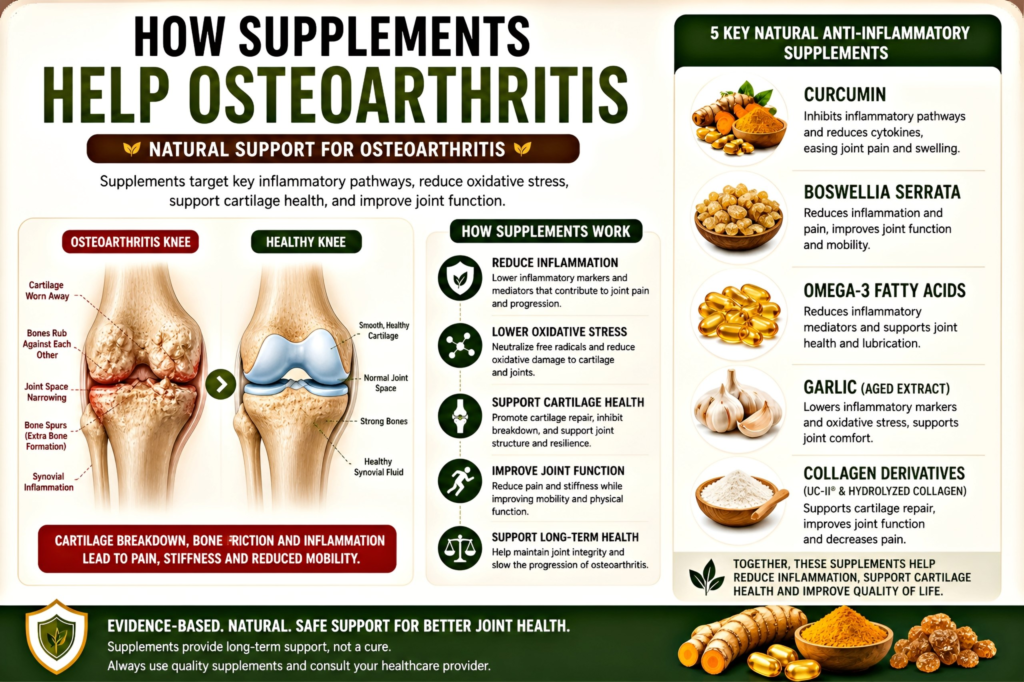
Osteoarthritis involves chronic low-grade inflammation, cartilage breakdown, and increased oxidative stress, which contribute to joint pain, stiffness, and reduced mobility.
The best supplements for osteoarthritis work by targeting key inflammatory pathways and supporting cartilage health, helping to slow joint degeneration and improve symptoms.
Certain supplements may help by:
•Reducing inflammatory markers and mediators involved in joint pain
•Decreasing oxidative stress that contributes to cartilage damage
•Supporting cartilage repair and joint structure
•Improving joint function and mobility
Several randomized controlled trials (RCTs) report improvements in pain, stiffness, and physical function when these supplements are used consistently alongside standard care. These mechanisms explain why the best supplements for osteoarthritis can play an important role in long-term joint support.
Best Supplements for Osteoarthritis
Many experts recommend the best supplements for knee osteoarthritis reduce inflammation naturally.
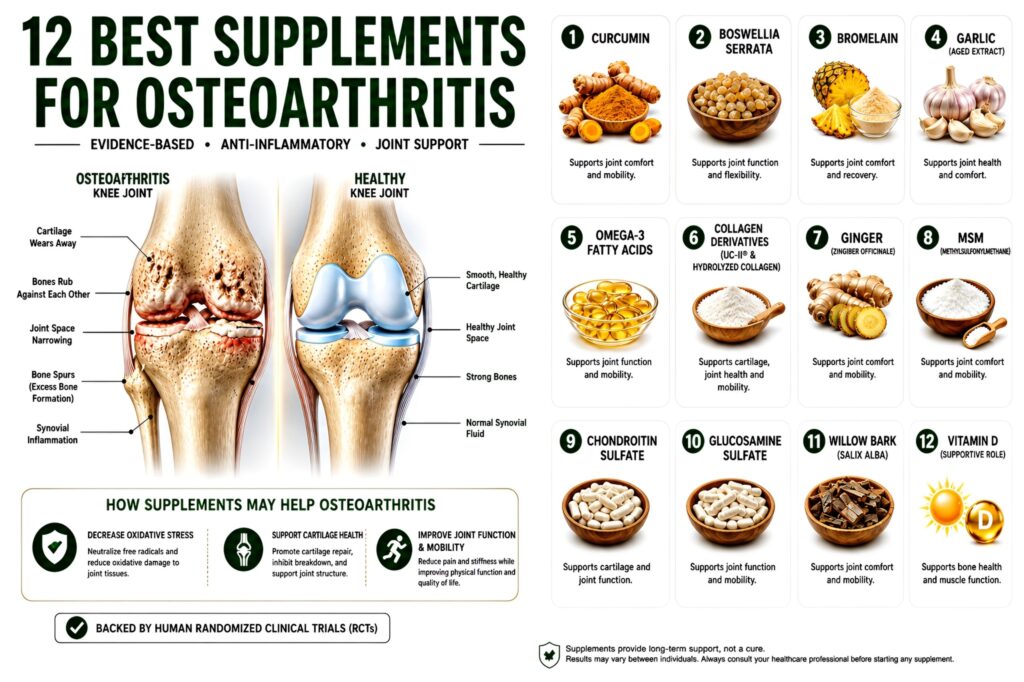
1. Curcumin (Turmeric extract) – A well researched supplement for knee osteoarthritis supported by randomized clinical trials
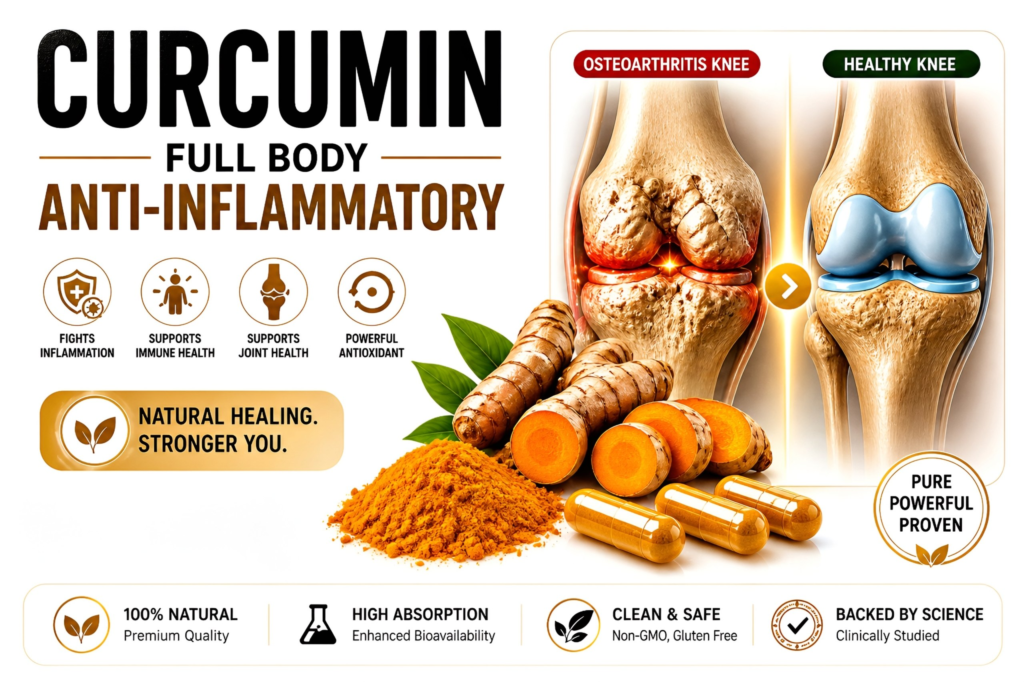
Curcumin is one of the best supplements for osteoarthritis, with strong evidence from randomized clinical trials.
Mechanism of Action
•Inhibits inflammatory pathways such as NF-κB
•Reduces pro-inflammatory cytokines (TNF-α, IL-6)
•Provides antioxidant activity to reduce oxidative stress
•Modulates inflammatory signaling involved in joint degeneration
Benefits
•Reduces knee osteoarthritis pain
•Improves physical function and mobility
•Provides anti-inflammatory effects comparable to NSAIDs
•Well tolerated with minimal adverse effects
What Research Shows
A 2020 systematic review of randomized controlled trials evaluated the effects of turmeric and curcumin extracts in individuals with knee osteoarthritis. Across 10 clinical trials, all studies reported significant improvements in pain and physical function compared to baseline.
In three trials comparing curcumin directly with NSAIDs, there were no significant differences in outcomes, suggesting comparable effectiveness in symptom relief. Compared with placebo, curcumin demonstrated consistent benefits in reducing pain and improving function.
Importantly, no significant adverse events were reported in the curcumin groups across studies, indicating a favorable safety profile. However, variations in formulation and bioavailability-enhanced extracts (such as Meriva, Theracurcumin, and Curene) may influence effectiveness.
Another Systematic Review and Meta-Analysis of Randomized Clinical Trials published by James W Daily et al. J Med Food. 2016 suggest that curcumin has significant anti-inflammatory effects and may improve pain and function in people with knee osteoarthritis.
Overall, current evidence from randomized controlled trials supports curcumin as a beneficial and alternative option for managing knee osteoarthritis symptoms.
Read our detailed guide on:
Curcumin for Osteoarthritis backed by clincal trials
Curcumin for Rheumatoid arthritis backed by clincal trials
Dose Used in Studies
Ranged from ~93 mg/day to 2000 mg/day
Various bioavailable formulations used (Meriva, Theracurcumin, Curene)
No single optimal dose established due to variability across trials
If you’re considering one of the best well-formulated highly bioavailable organic curcumin supplements with good absorption, you can explore this option here:
Turmeric 3D Award-Winning Powerful 3-in-1 USDA Certified Organic Fermented Turmeric Complex for Healthy Inflammation Support
This patented supplement is NSF certified and also offers a 1 year money-back guarantee, which provides additional confidence for the first time buyers.
2. Boswellia – Boswellia serrata (Indian Frankincense)
Boswellia is another of the best supplements for osteoarthritis, known for reducing pain and stiffness.
Mechanism of Action
•Inhibits 5-lipoxygenase (5-LOX) enzyme
•Reduces leukotriene-mediated inflammation
•Active compound AKBA (3-O-Acetyl-11-keto-beta-boswellic acid) drives anti-inflammatory effects
•Helps modulate inflammatory pathways involved in joint degeneration
Benefits
•Reduces joint pain and stiffness
•Improves physical function and mobility
•Supports anti-inflammatory activity in osteoarthritis
•Well tolerated with good safety profile
What Research Shows
A 2023 systematic review of randomized controlled trials evaluated the effectiveness of Boswellia serrata extract in osteoarthritis. Compared with control groups, Boswellia significantly reduced pain scores (VAS and WOMAC pain), stiffness, and improved joint function (WOMAC function and Lequesne index), with strong statistical significance..
Clinical trials consistently showed improvements in pain, stiffness, and functional outcomes, indicating meaningful symptomatic relief.
The active compound AKBA plays a key role through inhibition of inflammatory pathways such as 5-LOX.
Importantly, Boswellia extracts such as 5-Loxin and Aflapin demonstrated good safety, with no significant toxic side effects even at higher doses.
Overall, current randomized controlled trial evidence supports Boswellia as an effective and safe option for improving osteoarthritis symptoms, particularly when used consistently.
Dose Used in Studies
100–250 mg/day (standardized extract – (~60–65% boswellic acids)
Clinical improvements typically seen after ≥4 weeks of use
Common formulations include 5-Loxin and Aflapin
A standardized boswellia extract may provide better results, and you can check one good NSF certified option available here:
Joint & Muscle Care -Innovative Inflammation Support Supplement Utilizing Frankincense, Myrrh & Triple Fermented Turmeric
3. Bromelain
This makes bromelain one of the best supplements for osteoarthritis, especially for reducing joint inflammation and improving mobility.
Mechanism of Action
•Proteolytic enzyme that reduces inflammation
•Modulates inflammatory mediators and cytokines
•Provides antioxidant and analgesic effects
•Helps reduce swelling and tissue inflammation
Benefits
•Reduces joint pain
•Decreases stiffness
•Improves physical function
•Enhances joint mobility and range of motion
What Research Shows
A 2023 systematic review of randomized controlled trials evaluated the effects of bromelain on osteoarthritis symptoms. Results showed that bromelain supplementation may reduce joint pain and stiffness while improving physical function.
Improvements were observed in functional outcomes such as WOMAC scores and physical components of quality-of-life measures (SF-36). These findings suggest that bromelain may support mobility and reduce symptom severity in individuals with osteoarthritis.
Due to its anti-inflammatory, antioxidant, and analgesic properties, bromelain may act as a supportive therapy for managing osteoarthritis-related symptoms. However, compared to other supplements, the number of large, high-quality trials remains limited.
Overall, current evidence suggests bromelain may be a useful adjunct option for improving symptoms, though further research is needed to confirm its long-term effectiveness.
Dose Used in Studies
200–800 mg/day
These above 3 options are considered among the best supplements for osteoarthritis based on clinical evidence.
4. Garlic (Allium sativum)
Garlic is considered among the best supplements for osteoarthritis due to its ability to lower inflammatory markers and support joint health.
Mechanism of Action
•Reduces pro-inflammatory cytokines (TNF-α, IL-1β, IL-6)
•Provides antioxidant effects
•Modulates inflammatory pathways involved in joint degeneration
•Helps reduce oxidative stress in joint tissues
Benefits
•Reduces joint pain
•Lowers inflammatory markers
•Improves physical function
•Supports overall joint health
What Research Shows
A 2021 systematic review of randomized clinical trials evaluated the role of garlic in osteoarthritis management. The analysis included five clinical trials, where garlic supplementation was compared with control groups.
Results showed that garlic and its active constituents significantly improved osteoarthritis symptoms. Patients receiving garlic demonstrated reductions in pain and inflammatory marker levels, along with improvements in physical function compared to controls.
The anti-inflammatory effects of garlic are mediated through the reduction of cytokines such as TNF-α, IL-1β, and IL-6, which are key drivers of inflammation in osteoarthritis.
Although the number of trials is relatively small, current randomized clinical evidence suggests garlic may be a useful supportive option for improving symptoms and reducing inflammation in osteoarthritis.
Dose Used in Studies
Around 1000 mg/day (average dose across trials)
5. Omega-3 Fatty Acids (n-3 PUFAs)
Omega-3 fatty acids are widely recognized as one of the best supplements for osteoarthritis, helping reduce pain and improve joint function.
Mechanism of Action
•Reduces production of inflammatory eicosanoids
•Modulates immune and inflammatory responses
•Decreases cytokines involved in joint inflammation
•Supports anti-inflammatory lipid pathways
Benefits
•Reduces joint pain
•Improves joint function
•Enhances mobility
•Supports anti-inflammatory balance
What Research Shows
A 2024 meta-analysis of randomized controlled trials evaluated the effects of omega-3 polyunsaturated fatty acids (n-3 PUFAs) in patients with osteoarthritis. Results showed that omega-3 supplementation significantly reduced arthritis-related pain compared to placebo.
In addition, omega-3 intake was associated with improvements in joint function, particularly when assessed using standardized measures such as the WOMAC index. Subgroup analyses confirmed consistent improvements in both pain and functional outcomes across studies.
A second meta-analysis further supports these findings, indicating that omega-3 fatty acids may provide meaningful symptom relief and functional benefits in osteoarthritis patients.
Overall, evidence from randomized controlled trials suggests that omega-3 supplementation can be an effective supportive strategy for reducing pain and improving joint function in osteoarthritis.
Dose Used in Studies
750–2500 mg/day (EPA + DHA combined)
6. Collagen Derivatives (UC-II & Hydrolyzed Collagen)
Collagen derivatives are among the best supplements for osteoarthritis, particularly for supporting cartilage repair and long-term joint health.
Mechanism of Action
UC-II (Undenatured Type II Collagen):
•Induces oral immune tolerance
•Reduces autoimmune response against joint cartilage
Hydrolyzed Collagen (Collagen Peptides):
•Provides amino acids for cartilage repair
•Supports extracellular matrix synthesis
•Helps reduce cartilage degradation and joint inflammation
Benefits
•Reduces joint pain
•Improves joint function and mobility
•Supports cartilage health and repair
•Enhances overall joint structure
What Research Shows
A 2024 meta-analysis of randomized controlled trials published in Osteoarthritis and Cartilage journal evaluated the efficacy and safety of collagen derivatives in osteoarthritis. The analysis provided strong evidence supporting the effectiveness of collagen supplements in reducing pain and improving joint function.
Both undenatured type II collagen (UC-II) and hydrolyzed collagen demonstrated clinically meaningful improvements in osteoarthritis symptoms. These benefits include reductions in pain scores and improvements in mobility and functional outcomes.
Importantly, the analysis also confirmed a favorable safety profile, with collagen derivatives being well tolerated across studies. Overall, high-quality randomized evidence supports collagen derivatives as an effective and safe option for managing osteoarthritis symptoms.
Dose Used in Studies
UC-II (Undenatured Type II Collagen):
10–40 mg/day
Hydrolyzed Collagen (Collagen Peptides):
5–10 g/day
7. Ginger (Zingiber officinale)
Ginger remains one of the best supplements for osteoarthritis for mild to moderate symptom relief and inflammation control.
Mechanism of Action
•Inhibits COX and LOX inflammatory pathways
•Reduces prostaglandin and cytokine production
•Provides antioxidant effects
•Modulates inflammatory signaling involved in joint pain
Benefits
•May reduce joint pain
•Supports anti-inflammatory activity
•May improve joint comfort
•Well tolerated with good safety profile
What Research Shows
A 2015 meta-analysis of randomized placebo-controlled trials published in Osteoarthritis and Cartilage journal evaluated the efficacy and safety of ginger in osteoarthritis patients. The results suggest that ginger is modestly effective in reducing osteoarthritis symptoms, with an overall moderate level of evidence.
However, some individual trial outcomes showed no statistically significant differences between ginger and control groups in measures such as pain (VAS), symptoms (KOOS), daily activities, and quality of life (P > 0.05). These mixed findings indicate variability in clinical effectiveness across studies.
Despite this, ginger demonstrated a favorable safety profile, with no significant differences in adverse effects compared to control groups.
Overall, current randomized evidence suggests ginger may provide mild to moderate symptom relief, but its effects are less consistent compared to stronger supplements like curcumin or collagen.
Dose Used in Studies
250–500 mg per capsule typically 2 capsules daily
8. MSM (Methylsulfonylmethane)
MSM is considered one of the best supplements for osteoarthritis for improving physical function and reducing joint discomfort.
Mechanism of Action
•Provides sulfur for connective tissue and cartilage support
•Reduces inflammatory signaling in joint tissues
•Acts as an antioxidant
•Helps reduce oxidative stress and joint inflammation
Benefits
•Reduces joint pain
•Improves physical function
•Enhances mobility
•Supports daily activity performance
What Research Shows
A 2014 randomized, double-blind, placebo-controlled trial involving 100 patients with knee and hip osteoarthritis evaluated the effects of MSM supplementation. Participants received MSM or placebo over a 26-week period.
Compared to placebo, the MSM group showed significant improvements across all WOMAC subscales (P < 0.05), including reductions in pain, stiffness, and physical function limitations.
In addition, improvements were observed in daily living activities based on SF-36 assessments, along with favorable patient and physician evaluations.
Importantly, MSM supplementation was well tolerated, with no significant adverse events reported during the study period.
Overall, randomized clinical evidence suggests MSM can improve physical symptoms and functional outcomes in osteoarthritis patients.
Dose Used in Studies
6 grams per day
9. Chondroitin Sulfate
Chondroitin is included among the best supplements for osteoarthritis due to its role in supporting cartilage and joint structure.
Mechanism of Action
•Supports cartilage structure by maintaining hydration and elasticity
•Inhibits cartilage-degrading enzymes (e.g., metalloproteinases)
•Reduces inflammatory signaling within joint tissues
•Helps slow breakdown of joint cartilage
Benefits
•Reduces joint pain
•Improves joint function
•Supports cartilage preservation
•Lower risk of serious adverse effects compared to standard therapies
What Research Shows (RCT-Based)
A 2015 systematic review of randomized and quasi-randomized clinical trials involving adults with osteoarthritis (duration ranging from 1 month to 3 years) evaluated the effects of chondroitin compared with placebo and active controls.
In trials lasting less than 6 months, participants receiving chondroitin experienced statistically significant and clinically meaningful improvements in pain scores compared to placebo. Pain reduction showed an absolute improvement of approximately 10%, with a number needed to treat (NNT) of 5.
However, variability between studies was high, and overall evidence quality ranged from low to moderate.
Dose Used in Studies
≥ 800 mg per day typical range: 800–1,200 mg daily
10. Glucosamine Sulfate
Glucosamine is one of the best supplements for osteoarthritis for maintaining joint function and supporting cartilage health.
Mechanism of Action
•Supports cartilage formation by stimulating glycosaminoglycan synthesis
•Provides structural components necessary for joint cartilage repair
•May reduce inflammatory processes in joint tissues
•Helps slow cartilage degradation
Benefits
•Reduces knee osteoarthritis pain
•Supports joint function
•May improve mobility in some patients
•Potential role in long-term joint preservation
What Research Shows (RCT-Based)
A 2018 systematic review and meta-analysis of 18 randomized clinical trials (2003–2016) evaluated the effects of glucosamine in patients with knee osteoarthritis.
Results showed a marginally favorable reduction in pain scores (VAS) in patients receiving glucosamine compared to placebo.
However, improvements in knee function measured by WOMAC were small and not statistically significant, indicating limited functional benefit.
A subgroup analysis using the Japanese Knee Osteoarthritis Measure (JKOM) demonstrated that glucosamine was superior to placebo in reducing symptoms, although the sample size was small.
Overall, randomized evidence suggests that glucosamine may help alleviate knee osteoarthritis pain, but its effects on joint function and structural outcomes remain uncertain and require further research.
Dose Used in Studies
1,200–1,500 mg per day
11. Vitamin D
Vitamin D may support overall joint and bone health and is often included among the best supplements for osteoarthritis as a support nutrient.
Mechanism of Action
•Regulates calcium and bone metabolism
•Supports subchondral bone health
•Modulates immune and inflammatory responses
•May influence cartilage integrity and muscle function
Benefits
•May help reduce osteoarthritis pain in deficient individuals
•Supports bone strength and joint stability
•Potential improvement in functional outcomes
•May contribute to slowing structural progression in some cases
What Research Shows
A 2021 systematic review of randomized controlled trials published in Wiley Online Library evaluating vitamin D supplementation in knee osteoarthritis found mixed and inconclusive results.
Some trials reported improvements in pain and functional outcomes, while others showed no significant benefit compared to placebo. Overall, the evidence does not consistently support vitamin D as an effective standalone treatment for osteoarthritis symptoms.
However, observational and longitudinal data suggest that maintaining adequate vitamin D levels may be associated with improved structural and symptomatic outcomes in knee osteoarthritis patients.
Due to variability in study design, baseline vitamin D status, and dosing strategies, the current evidence remains inconclusive, and further high-quality RCTs are needed.
Dose Used in Studies
800 IU to 50,000 IU (varied widely across studies)
12. Willow Bark Extract
Willow bark is considered one of the best supplements for osteoarthritis for natural pain relief, although evidence is more limited.
Mechanism of Action
•Contains salicin, a precursor to salicylic acid with analgesic effects
•Inhibits cyclooxygenase (COX) enzymes, reducing prostaglandin synthesis
•Provides anti-inflammatory and pain-relieving activity
•Acts similarly to mild NSAIDs
Benefits
•Reduces osteoarthritis pain
•Provides moderate analgesic effect
•Improves patient-reported pain scores
•Well tolerated in short-term use
What Research Shows A 2001 randomized, double-blind, placebo-controlled clinical trial evaluated the efficacy of a standardized willow bark extract in patients with osteoarthritis over a 2-week period. Participants received willow bark extract standardized to 240 mg salicin per day or placebo.
Results showed that the willow bark group experienced significant reductions in pain compared to placebo, as measured by visual analogue scale (VAS) scores. The study concluded that willow bark extract provides a moderate analgesic effect in osteoarthritis and is well tolerated.
Dose Used in Studies
Equivalent to 240 mg salicin per day
What are the best supplements for osteoarthritis?
The best supplements for osteoarthritis include curcumin, boswellia, collagen, omega-3 fatty acids, and other evidence-based options. These supplements work by reducing inflammation, supporting cartilage health, and improving joint function. Choosing the best supplements for osteoarthritis depends on clinical evidence, dosage, and individual response.
Comparison of the Best Supplements for Osteoarthritis
This comparison highlights the best supplements for osteoarthritis based on clinical trial evidence
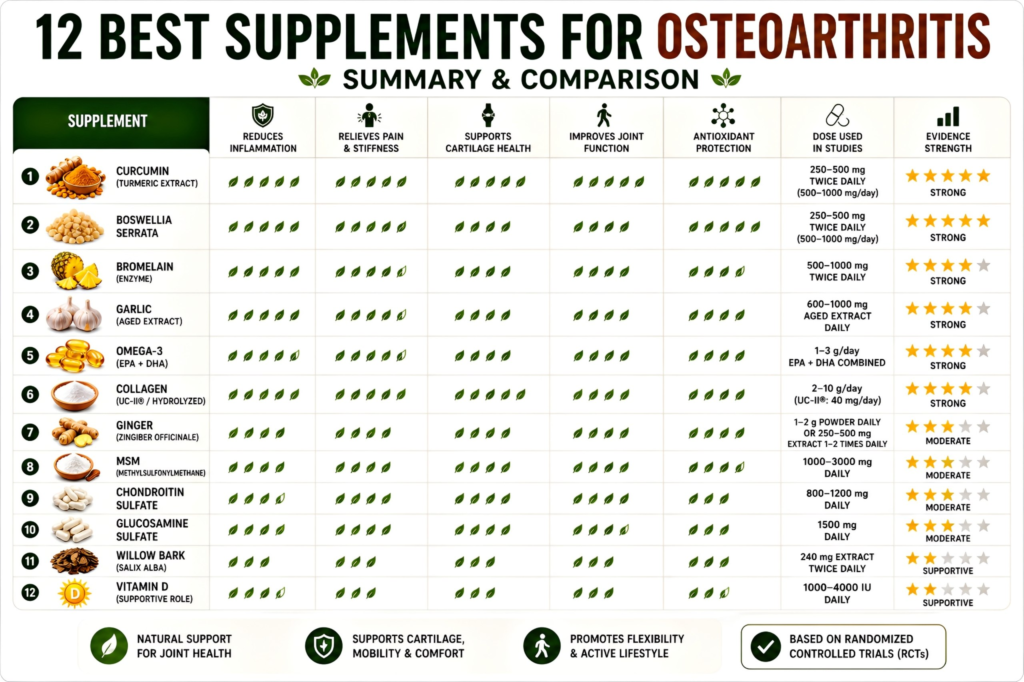
Based on evidence from randomized controlled trials (RCTs), supplements for osteoarthritis can be categorized according to the strength and consistency of clinical evidence,
Strongest Clinical Evidence (Multiple RCTs & Meta-analyses)
Curcumin – Consistent improvements in pain and function, with effects comparable to NSAIDs in some trials
Collagen derivatives (UC-II & Hydrolyzed Collagen) – Strong evidence from trial sequential meta-analysis supporting improvements in joint pain and function
Strong–Moderate Evidence (Good RCT Support)
Boswellia serrata – Significant improvements in pain, stiffness, and joint function (WOMAC, VAS)
Omega-3 fatty acids – Meta-analyses show reduction in pain and improvement in joint function
Garlic – Multiple RCTs demonstrate reductions in inflammatory markers and improvements in physical function
Bromelain – Significant improvement in pain and function, but limited number of high-quality trials
Moderate Evidence (Limited or Mixed RCT Findings)
MSM (Methylsulfonylmethane) – Significant improvements in WOMAC scores and daily activity performance
Ginger – Modest efficacy with mixed results across trials
Limited Evidence (Small or Inconsistent RCTs)
Vitamin D– Some improvement in pain and function while in others trials no improvement observed.
Limitations of Current Research
Despite promising findings from randomized clinical trials:
Many studies have relatively small sample sizes
Supplement formulations and dosages vary widely
Long-term safety and effectiveness data remain limited
Results differ across trials and populations.
Therefore, while current evidence is encouraging, larger, well-designed placebo-controlled randomized trials are needed to further confirm the efficacy and safety of these supplements.
Safety & Expectations for Knee Osteoarthritis Supplements
When using the best supplements for knee osteoarthritis, it is important to understand that these are designed for long-term joint support, not as a cure for the condition.
What to Expect
Supplements work gradually by targeting inflammation and joint health
Noticeable improvements may take 2–8 weeks, depending on the supplement and individual response
Results can vary based on severity of osteoarthritis, lifestyle, and consistency of use
Safety Considerations
Most supplements discussed in this guide are supported by randomized controlled trials (RCTs) and are generally well tolerated and minimal adverse effects compared to placebo or coventional medicines. However, dosage, formulation, and individual health conditions can influence outcomes.
Pro Tip
Combining multiple anti-inflammatory supplements such as curcumin, boswellia, MSM and supportive herbs may provide synergistic broader benefits by targeting different inflammatory pathways.
However evidence on combination use is still limited in clinical trials. Still not all combinations have been studied extensively
and finally Individual response may vary.
Final Verdict on Best Supplements for Knee Osteoarthritis 2026
The best supplements for osteoarthritis can help reduce pain, improve joint function, and support overall joint health when used alongside standard medical care.
Among all options, curcumin and collagen derivatives stand out as the most effective, supported by strong evidence from randomized controlled trials. Supplements such as Boswellia, omega-3 fatty acids, and garlic provide additional benefits with moderate clinical support.
Hence, the best supplements for osteoarthritis are those supported by randomized clinical trials and consistent results.
Overall, a balanced, evidence-based approach using clinically studied supplements can support osteoarthritis management while maintaining safety and long-term effectiveness.
Reviewed by Moviva Health Research Team
The Moviva Research Team focuses on evidence-based wellness, nutrition, inflammation research, and natural health topics. Our goal is to simplify scientific research into practical, reader-friendly health information backed by published studies and clinical evidence.
We analyze human trials, animal studies, systematic reviews, meta-analyses, and emerging research adn sometimes traditional medicines uses related to arthritis, joint health, inflammation, nutrition, supplements, and lifestyle medicine to make science and experinece based articles for the public.
Medical Disclaimer
This article is for educational and informational purposes only and does not constitute medical advice. Always consult a qualified healthcare professional before making dietary or supplement changes, especially if you have arthritis or take medications.
References
Efficacy and mechanisms of curcumin in the treatment of osteoarthritis: A scoping review
https://www.researchgate.net/publication/387247654_Efficacy_and_mechanisms_of_curcumin_in_the_treatment_of_osteoarthritis_A_scoping_review
Therapeutic effects of turmeric or curcumin extract on pain and function for individuals with knee osteoarthritis: a systematic review
https://bmjopensem.bmj.com/content/bmjosem/7/1/e000935.full.pdf
Effectiveness of Boswellia serrata Roxb. extract on osteoarthritis treatment: A systematic review of randomized controlled trials
https://link.springer.com/article/10.1186/s12906-020-02985-6
The effects of bromelain on osteoarthritis symptoms: A systematic review
https://www.researchgate.net/publication/373289830_The_effects_of_bromelain_on_osteoarthritis_symptoms_A_systematic_review
Allium sativum L. (Garlic) Role in Osteoarthritis: A Systematic Review of Clinical Trials
https://www.researchgate.net/publication/348191144_Allium_sativum_L_Garlic_Role_in_Osteoarthritis_A_Systematic_Review_of_Clinical_Trials
Effect of omega-3 polyunsaturated fatty acids supplementation for patients with osteoarthritis: a meta-analysis
https://link.springer.com/content/pdf/10.1186/s13018-023-03855-w.pdf
Efficacy and safety of collagen derivatives for osteoarthritis: A trial sequential meta-analysis
https://www.sciencedirect.com/science/article/pii/S1063458424000049
Efficacy and safety of ginger in osteoarthritis patients: a meta-analysis of randomized placebo-controlled trials
https://www.sciencedirect.com/science/article/pii/S106345841401276X
The Effect of Methylsulfonylmethane on Osteoarthritic Large Joints and Mobility
https://www.researchgate.net/publication/318209008_The_Effect_of_Methylsulfonylmethane_on_Osteoarthritic_Large_Joints_and_Mobility
Chondroitin for osteoarthritis systematic review of randomized trials
https://pmc.ncbi.nlm.nih.gov/articles/PMC4881293/
Effects of glucosamine in patients with osteoarthritis of the knee: a systematic review and meta-analysis
https://link.springer.com/content/pdf/10.1007/s10067-018-4106-2.pdf
Current Evidence on and Clinical Implications of Vitamin D Levels in Pain and Functional Management of Knee Osteoarthritis: A Systematic Review
https://pdfs.semanticscholar.org/f54a/b3afd4c3ea06063b643662f05be4ffc7d0cb.pdf
Maintaining Vitamin D Sufficiency Is Associated with Improved Structural and Symptomatic Outcomes in Knee Osteoarthritis
https://www.ncbi.nlm.nih.gov/pubmed/28549923
Standardized willow bark extract in patients with osteoarthritis: randomized placebo-controlled, double blind clinical trial
https://onlinelibrary.wiley.com/doi/abs/10.1002/ptr.981