7 Best Herbs for Knee Osteoarthritis (2026 Evidence-Based Guide)
Introduction
Best herbs for knee osteoarthritis may help reduce inflammation, improve joint function, and support long-term joint health naturally.
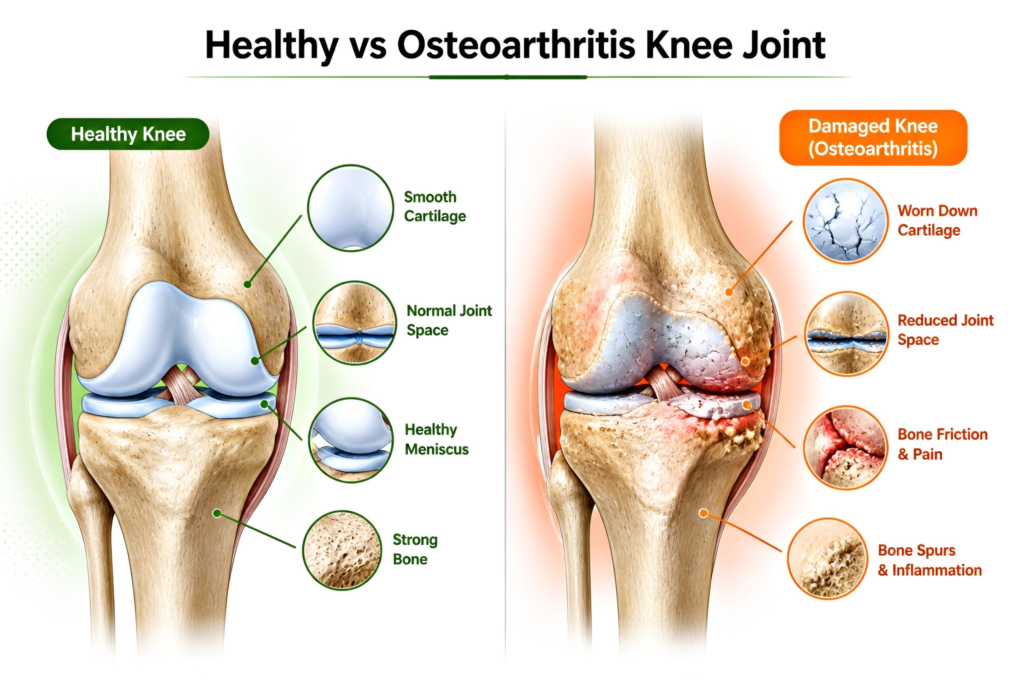
Knee osteoarthritis is a degenerative joint condition characterized by cartilage breakdown, chronic inflammation, pain, and reduced mobility. While conventional treatments such as NSAIDs are commonly used, long-term use may be associated with side effects.
As a result, many people explore herbal options that may help reduce inflammation and support joint health. Hence these best herbs for knee osteoarthritis are gaining attention as natural options to reduce pain, inflammation, and improve joint function. This article reviews the most studied herbs based on mechanism of action, traditional use, clinical evidence, and dosage form (extract vs powder).
You can also explore:
•Curcumin for knee osteoarthritis
•Boswellia for knee osteoarthritis
•Curcumin vs Boswellia comparison for knee osteoarthritis
How We Selected These Herbs
The herbs included were selected based on:
Clinical trials and meta-analyses
Known anti-inflammatory pathways
Traditional use in herbal medicine systems
Relevance to joint pain and osteoarthritis
Curcumin (Turmeric)
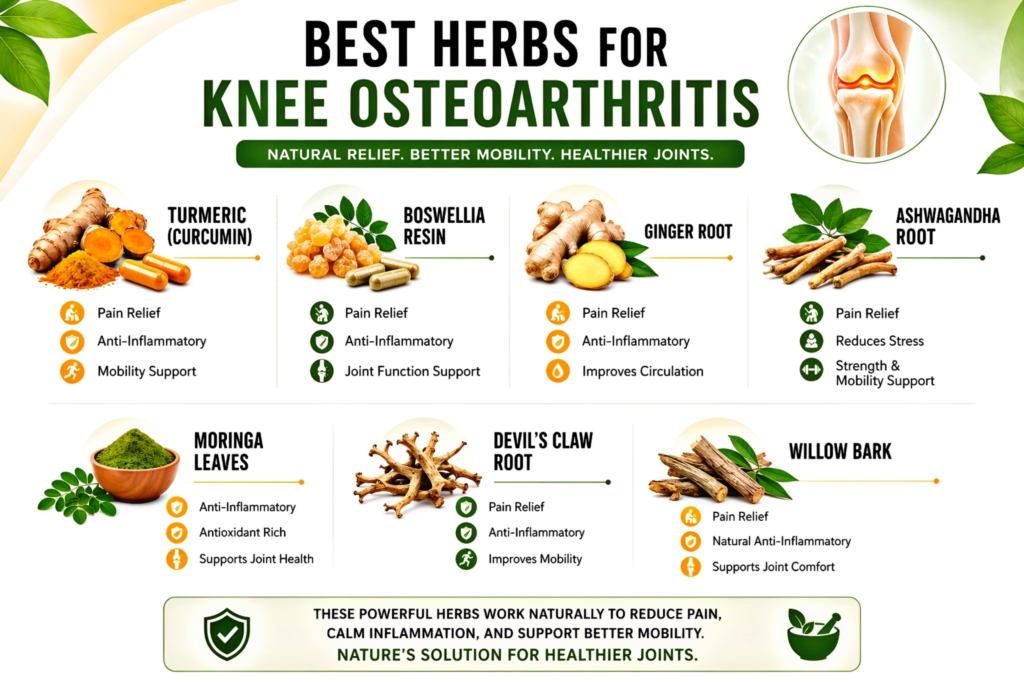
Curcumin is considered one of the best herbs for knee osteoarthritis due to its strong anti-inflammatory and pain-relieving properties.
Mechanism of Action
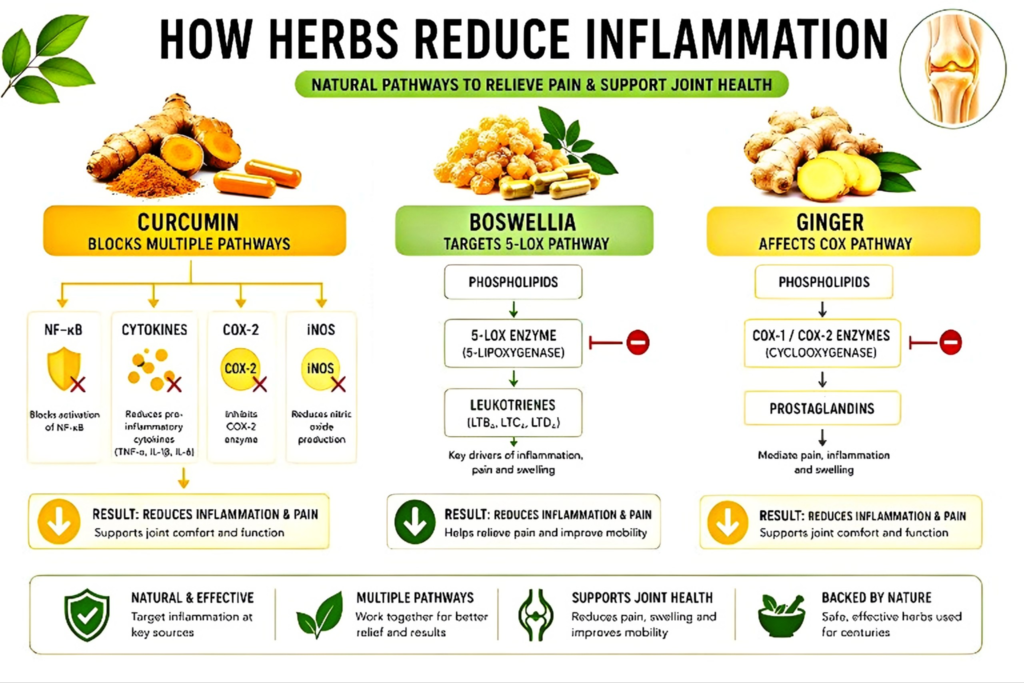
Inhibits NF-κB signaling (reduces inflammation genes)
Suppresses pro-inflammatory cytokines (TNF-α, IL-6)
Reduces oxidative stress (ROS scavenging)
Traditional Use
Used in for inflammation, joint pain, and wound healing.
What Research Shows
Meta-analyses and clinical trials suggest curcumin improves pain, stiffness, and function, with some studies showing comparable effects to NSAIDs.
Typical Dose
Extract: 500–1500 mg/day (standardized curcuminoids)
Powder: 1–3 g/day turmeric powder (less potent)
Often combined with piperine for better absorption.
We highly suggest you to read our indepth article on why this is the best curcumin supplement of 2026
Boswellia Serrata
Boswellia is one of the best herbs for knee osteoarthritis as it helps reduce joint inflammation and improve mobility
Mechanism of Action
Inhibits 5-lipoxygenase (5-LOX) → reduces leukotrienes
Modulates inflammatory cytokines
May help protect cartilage matrix
Traditional Use
Used in for arthritis, inflammation, and respiratory conditions.
What Research Shows
Clinical studies show improvements in pain, stiffness, and joint function in osteoarthritis patients.
Typical Dose
Extract: 100–500 mg/day (standardized to boswellic acids)
Powder (raw resin): rarely used clinically
Ginger
Ginger is one of the best herbs for knee osteoarthritis as it may help reduce pain and stiffness through natural anti-inflammatory compounds.
Mechanism of Action
Inhibits COX and LOX pathways
Reduces prostaglandin synthesis
Antioxidant activity
Traditional Use
Used in Ayurveda and traditional Chinese medicine for inflammation and digestive health.
What Research Shows
Some trials show modest pain reduction and improved mobility in osteoarthritis.
Typical Dose
Extract: 250–1000 mg/day
Powder: 1–2 g/day dried ginger
Ashwagandha
Ashwagandha is considered one of the best herbs for knee osteoarthritis for its role in reducing inflammation and supporting overall joint function.
Mechanism of Action
Modulates immune response
Reduces cortisol-related inflammation
Supports tissue repair
Traditional Use
Used in for strength, vitality, and joint support.
What Research Shows
Limited evidence suggests potential anti-inflammatory and supportive benefits, but direct clinical evidence in osteoarthritis is still limited.
Typical Dose
Extract: 300–600 mg/day (standardized root extract)
Powder: 3–5 g/day root powder
Moringa (Moringa oleifera)
Moringa is among the best herbs for knee osteoarthritis because of its antioxidant and anti-inflammatory support for joint health.
Mechanism of Action
Reduces inflammatory cytokines (TNF-α, IL-1β)
Antioxidant activity (rich in polyphenols)
May inhibit inflammatory enzymes
Traditional Use
Used in traditional medicine for inflammation, nutrition, and metabolic health.
What Research Shows
Preclinical and early clinical studies suggest anti-inflammatory and joint-supporting effects, but human evidence is still limited.
Typical Dose
Extract: 500–1000 mg/day
Powder (leaf): 3–5 g/day
Devil’s Claw
Devil’s claw is considered one of the best herbs for knee osteoarthritis as it may help reduce joint pain and improve mobility in chronic conditions.
Mechanism of Action
Contains harpagosides (anti-inflammatory compounds)
Reduces prostaglandin production
May inhibit inflammatory signaling pathways
Traditional Use
Used in traditional African medicine for arthritis and musculoskeletal pain.
What Research Shows
Clinical trials suggest improvement in pain and mobility in osteoarthritis.
Typical Dose
Extract: 600–1200 mg/day (standardized)
Willow Bark
Willow bark is one of the best herbs for knee osteoarthritis due to its natural salicin content, which may help reduce pain and inflammation.
Mechanism of Action
Contains salicin (converted to salicylic acid)
Reduces prostaglandin-mediated pain
Mild anti-inflammatory effect
Traditional Use
Used in Western herbal medicine for pain relief and fever.
What Research Shows
Some evidence supports mild to moderate pain relief in musculoskeletal conditions.
Typical Dose
Extract: 120–240 mg salicin/day
Quick Comparison Summary
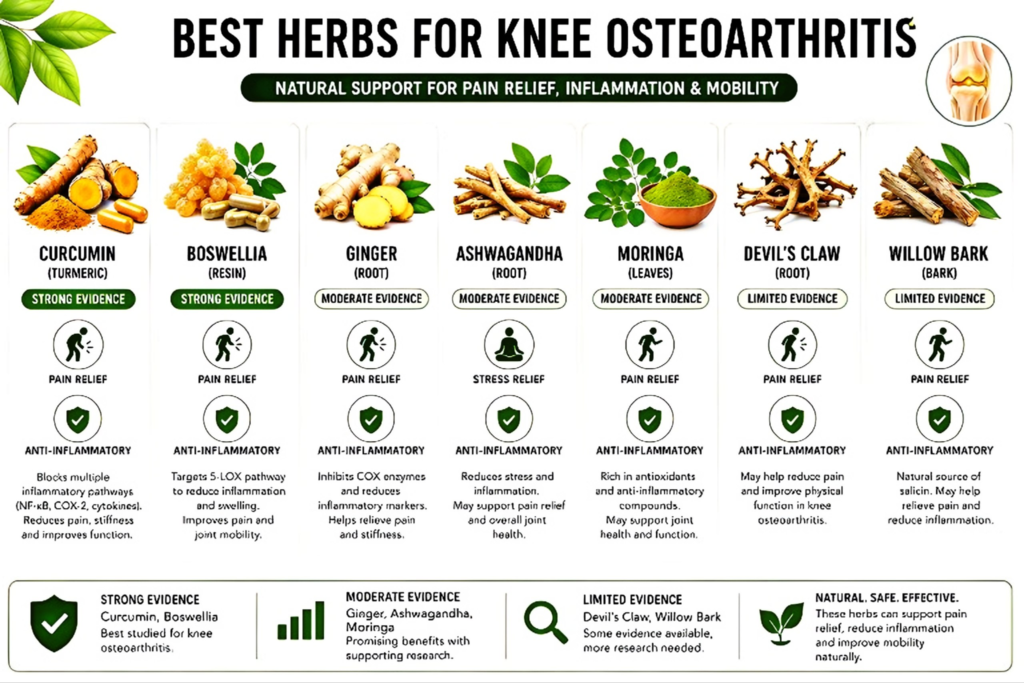
Best Herbs for Knee Osteoarthritis (Overview)
These best herbs for knee osteoarthritis have been studied for their anti-inflammatory and joint-support benefits.
Curcumin
Broad anti-inflammatory action
Strong clinical evidence
Best for long-term support
Boswellia
Targeted inflammation relief (5-LOX pathway)
Good clinical evidence
May provide faster symptom relief
Ginger
Mild anti-inflammatory effects
Moderate clinical evidence
Useful as supportive therapy
Devil’s Claw
Pain-focused herbal support
Moderate clinical evidence
May improve mobility and discomfort
Willow Bark
Natural NSAID-like effect (salicin)
Some clinical evidence
Supports pain relief
Ashwagandha
Supports stress and inflammation
Evidence in osteoarthritis is still emerging
Moringa
Rich in antioxidants and anti-inflammatory compounds
Potential supportive benefits
Limited clinical research in osteoarthritis
Important Note on Evidence
Curcumin & Boswellia → Stronger evidence
Ginger, Devil’s Claw → Moderate
Moringa, Ashwagandha → Supportive only
Conclusion
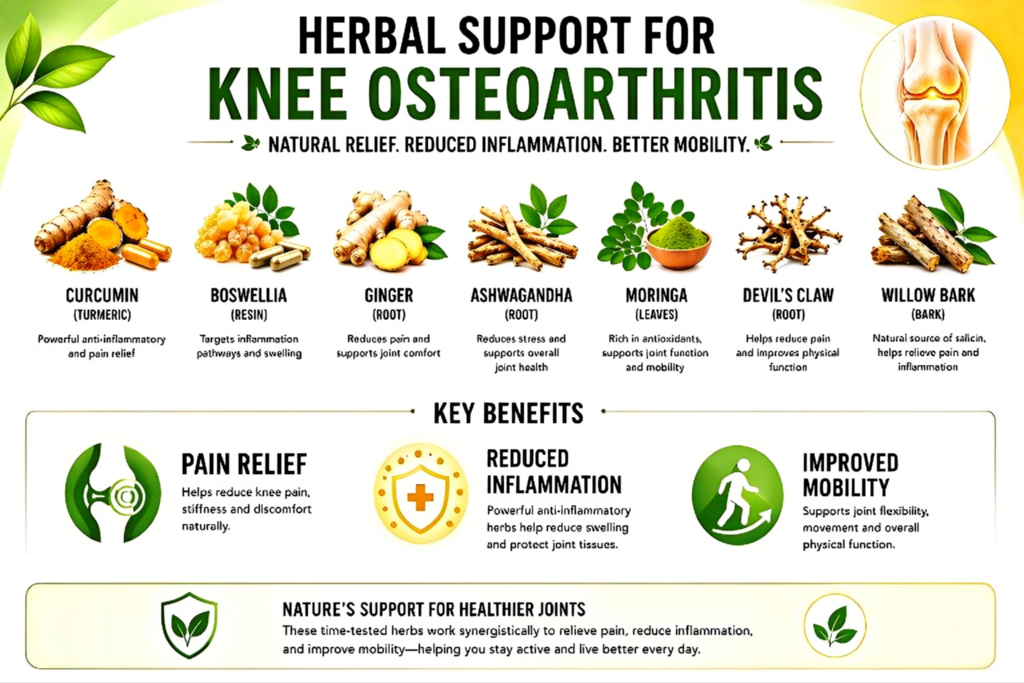
Curcumin and Boswellia are among the most well-studied herbal options for knee osteoarthritis, with evidence suggesting they may help reduce pain, improve joint function, and support mobility.
Curcumin works through multiple inflammatory pathways, making it suitable for long-term support, while Boswellia provides more targeted action and may offer faster relief in some individuals. Some research also suggests that combining both may provide enhanced benefits due to their complementary mechanisms.
Other herbs such as ginger, devil’s claw, and willow bark may offer additional support, although their evidence is more moderate. Moringa and ashwagandha can contribute to overall inflammation balance, but their direct clinical evidence in osteoarthritis remains limited.
Overall, the best herbs for knee osteoarthritis include curcumin, boswellia, moringa, ginger, and other evidence-based herbal options discussed in this guide, supported by clinical research for reducing inflammation and improving joint function. The best choice depends on individual needs, symptom severity, and consistent use, ideally alongside proper medical guidance and lifestyle changes.
Limitations
Herbal treatments provide supportive benefits, not a cure
Effects vary based on formulation, dosage, severity of OA and duration. More resarch trials are urgently needed to confirm robust clinical evidence in osteoarthritis.
About the Moviva Research Team
The Moviva Research Team focuses on evidence-based wellness, nutrition, inflammation research, and natural health topics. Our goal is to simplify scientific research into practical, reader-friendly health information backed by published studies and clinical evidence.
We analyze human trials, animal studies, systematic reviews, meta-analyses, and emerging research adn sometimes traditional medicines uses related to arthritis, joint health, inflammation, nutrition, supplements, and lifestyle medicine to make science and experinece based articles for the public.
Medical Disclaimer
This article is for educational and informational purposes only and does not constitute medical advice. Always consult a qualified healthcare professional before making dietary or supplement changes, especially if you have arthritis or take medications.
References
Curcumin – clinical evidence in osteoarthritis
https://pmc.ncbi.nlm.nih.gov/articles/PMC5871206/
Boswellia serrata – meta-analysis in osteoarthritis
https://pubmed.ncbi.nlm.nih.gov/32680575/
Ginger – randomized trial in osteoarthritis
https://pubmed.ncbi.nlm.nih.gov/32214292/
Devil’s Claw – clinical evidence in osteoarthritis
https://www.ncbi.nlm.nih.gov/books/NBK73219/
Willow bark in Osteoarthritis
https://pubmed.ncbi.nlm.nih.gov/15517622/
Moringa oleifera – Osteoprotective and Chondroprotective Effects
https://www.bioscmed.com/index.php/bsm/article/view/1316
Ashwagandha in knee joint pain
https://pubmed.ncbi.nlm.nih.gov/27647541/
General herbal therapies in osteoarthritis
https://www.dovepress.com/efficacy-and-safety-of-plant-derived-products-for-the-treatment-of-ost-peer-reviewed-fulltext-article-BTAT