
10 Science-Backed Benefits of Magnesium for Women Over 40

Magnesium is one of the most important minerals in the human body, yet many people fail to get enough through diet alone. It participates in more than 300 biochemical reactions involved in muscle function, nervous system regulation, sleep, bone metabolism, blood sugar control, cardiovascular health, and energy production.
For women, magnesium becomes increasingly important with age. Hormonal changes, chronic stress, poor sleep, processed foods, certain medications, and age-related changes in nutrient absorption may increase the risk of inadequate magnesium intake. Researchers have therefore studied magnesium extensively for its potential role in supporting sleep quality, mood balance, bone health, metabolic wellness, and healthy aging. Studies have also explored magnesium supplementation for premenstrual symptoms, cardiovascular health, migraine prevention, inflammation regulation, and overall well-being.
Because of these broad effects, many researchers consider magnesium one of the most important nutrients for women over 40. However, magnesium is not a miracle supplement and should be viewed as one part of a healthy lifestyle that includes nutritious food, physical activity, stress management, and adequate sleep.
In this article, we explore the most important magnesium benefits for women over 40 and what the scientific evidence actually shows.
Why Magnesium Matters More After 40
As women age, several physiological changes may increase the importance of magnesium. Sleep quality often declines, stress levels may increase, muscle recovery can become slower, and bone density naturally begins to decrease. At the same time, many women consume less magnesium than recommended due to modern dietary patterns.
Magnesium is involved in regulating nerve signaling, muscle contraction, blood pressure, glucose metabolism, and bone turnover. Researchers have therefore investigated whether maintaining healthy magnesium status may support multiple aspects of women’s health during aging. Your body uses magnesium every day to support normal cellular function, making it difficult to compensate for long-term inadequate intake.
Women entering perimenopause and menopause may also experience changes in sleep quality, mood, metabolic health, and bone metabolism. While magnesium is not a treatment for menopause, researchers continue to investigate its role in supporting healthy aging and overall well-being.
1. May Help Support Sleep Quality and Relaxation

Sleep difficulties become increasingly common with age. Many women over 40 report problems such as difficulty falling asleep, nighttime awakenings, lighter sleep, and reduced sleep quality. Because magnesium plays an important role in nervous system regulation, researchers have extensively studied its relationship with sleep.
Magnesium helps regulate several processes involved in relaxation and sleep. It influences neurotransmitters involved in calming the nervous system and may help support normal sleep-wake cycles.
A systematic review and meta-analysis published in BMC Complementary Medicine and Therapies evaluated magnesium supplementation and sleep outcomes in older adults with insomnia. Researchers concluded that magnesium may provide modest benefits for certain sleep parameters, although additional high-quality trials are still needed.
More recently, researchers investigated magnesium L-threonate (Magtein) in adults who reported dissatisfaction with their sleep. Participants receiving magnesium L-threonate experienced improvements in several sleep-related and cognitive measures compared with placebo.
Another randomized controlled trial involving magnesium bisglycinate used approximately 250 mg elemental magnesium daily and reported improvements in certain sleep outcomes among participants.
It is important to note that not every sleep study has shown identical results. Sleep quality depends on many factors including stress, caffeine intake, exercise habits, hormone changes, diet and overall health status. Nevertheless, the existing evidence suggests that maintaining adequate magnesium levels may help support relaxation and healthy sleep in some individuals.
Women who struggle with poor sleep should not view magnesium as a cure, but it may be one useful tool within a broader sleep-supportive lifestyle that includes good sleep hygiene, regular exercise, stress management, and a nutrient-rich diet.
2. May Help Support Stress, Mood, and Emotional Well-Being
Modern life places significant demands on the nervous system. Between work responsibilities, family obligations, financial pressures, caregiving duties, and sleep challenges, many women over 40 experience chronic stress that may affect both physical and emotional health.
Magnesium plays an important role in regulating the nervous system and the body’s stress response. Researchers have investigated magnesium because low magnesium status has been associated with increased stress vulnerability, nervous system dysregulation, and mood disturbances.
A 2017 systematic review published in Nutrients examining magnesium supplementation and subjective anxiety found that magnesium may help support individuals experiencing mild anxiety symptoms, although researchers noted that more high-quality studies are still needed. Researchers suggested that magnesium may influence neurotransmitter activity and stress-response pathways involved in emotional regulation.
Several studies have also explored magnesium’s role in supporting healthy mood. A systematic review published in Nutrients in 2020 discussed magnesium’s involvement in neurological function and emotional well-being, noting that inadequate magnesium intake may negatively influence several pathways involved in mood regulation.
While magnesium should never replace professional medical care for depression, anxiety, or other mental health conditions, maintaining adequate magnesium intake may help support overall nervous system function and emotional resilience.
For women over 40 navigating increased stress and hormonal changes, ensuring sufficient magnesium intake may be one practical step toward supporting overall well-being.
3. Supports Muscle Function and Exercise Recovery
Magnesium is essential for muscle contraction, muscle relaxation, energy production, electrolyte balance, and physical performance.
Many women notice increased muscle stiffness, slower recovery, fatigue, or occasional muscle cramps as they age. Because magnesium participates in numerous processes related to muscle health, researchers have extensively studied its role in physical performance and recovery.
A 2024 systematic review published in the Journal of Translational Medicine evaluated magnesium supplementation and exercise recovery. Researchers found evidence suggesting that magnesium may help support recovery from strenuous exercise and reduce certain markers associated with muscle damage and soreness.
Magnesium is also required for ATP production, the body’s primary energy molecule. Without adequate magnesium, cells cannot efficiently utilize energy, which may contribute to fatigue and reduced exercise capacity.
Several studies have reported that physically active individuals often have increased magnesium requirements due to losses through sweat and increased metabolic demands. Maintaining adequate magnesium intake may therefore become particularly important for women who engage in regular exercise, strength training, walking programs, yoga, or other physical activities.
Although magnesium is not a substitute for proper training, nutrition, hydration, and recovery practices, it remains one of the most important minerals involved in normal muscle function.

4. May Help Support Bone Health During Aging
Bone health becomes increasingly important after age 40. Women naturally experience changes in bone metabolism as they age, especially during and after menopause.
While calcium often receives most of the attention, magnesium also plays a critical role in maintaining healthy bones. Approximately 50–60% of the body’s magnesium is stored within the skeleton, where it contributes to bone structure and mineralization.
Research suggests that magnesium influences several processes involved in bone metabolism, including vitamin D activation, calcium regulation, osteoblast activity, and bone remodeling.
A systematic review and meta-analysis published in International Journal of Nursing Studies in 2021 examining magnesium and osteoporosis reported that adequate magnesium intake may contribute to maintaining healthy bone density and skeletal health. Researchers noted that magnesium deficiency may negatively affect bone quality and calcium balance.
Magnesium works closely with other nutrients involved in bone health, including:
•Calcium
•Vitamin D
•Vitamin K2
•Protein
•Phosphorus
•Zinc
•Vitamin B12
For this reason, experts increasingly emphasize a whole-nutrient approach rather than focusing on calcium alone.
One reason magnesium benefits for women over 40 receive so much attention is that maintaining healthy magnesium status may support multiple systems simultaneously, including bones, muscles, sleep, metabolism, and cardiovascular health.
While magnesium supplementation should not be viewed as a stand-alone osteoporosis treatment, adequate magnesium intake remains an important part of overall bone-supportive nutrition.
5. May Help Support Premenstrual Syndrome (PMS) Symptoms
Premenstrual syndrome (PMS) affects many women and may include symptoms such as mood changes, irritability, fatigue, headaches, bloating, breast tenderness, food cravings, and menstrual discomfort.
Because magnesium is involved in neurotransmitter regulation, muscle function, and fluid balance, researchers have studied whether magnesium supplementation may help support women experiencing PMS symptoms.
Infact magnesium deficiency in PMS was proposed in 1983 by Abraham. He postulated that magnesium deficiency could explain many of the diverse symptoms found in the syndrome. Magnesium nitrate had been used in the treatment of PMS and essential dysmenorrhoea in 1962 by Durlach and Lernierre. Abraham and Lubran showed in 1981 that 26 patients with PMS had lower erythrocyte magnesium levels than did nine normal premenopausal women as per this research paper published in Annals of Clinical Biochemistry in 1986. This led to conducting research trials on magnesium supplement in PMS in the coming years.
A review published in 2010 in the Iranian Journal of Nursing and Midwifery Research (IJNMR) examined nutritional approaches for PMS and reported that magnesium supplementation may help improve several PMS-related symptoms in some women. Researchers suggested that magnesium may influence serotonin activity, fluid retention, and neuromuscular function.
Another Trial published in International Journal of Women’s Health and Reproduction Sciences in 2024 on dysmenorrheal college students found that magnesium stearate 300 mg could significantly reduce all symptoms of dysmenorrhea compared to the placebo and was more effective in decreasing symptoms such as cramps, headache, back pain, foot pain, depression, irritability, and abdominal pain.
An old 1998 clinical study published in Journal of Women’s Health reported improvements in symptoms such as water retention, mood disturbances, and menstrual discomfort when 200 mg magnesium was daily supplemented for two menstrual cycles.
However, researchers also note that responses vary between individuals and additional large-scale studies are needed. PMS is influenced by numerous factors including hormonal fluctuations, sleep quality, stress, diet, and physical activity.
While magnesium should not be viewed as a cure for PMS, maintaining adequate magnesium intake may help support overall women’s health and quality of life.
6. Magnesium and PCOS Research
Polycystic Ovary Syndrome (PCOS) is one of the most common hormonal conditions affecting women and is often associated with insulin resistance, metabolic disturbances, inflammation, and hormonal imbalances.
Researchers have become increasingly interested in magnesium because magnesium deficiency has been linked with impaired glucose metabolism and reduced insulin sensitivity and increased the risk of PCOS.
Several clinical studies have investigated magnesium supplementation as part of broader nutritional interventions for women with PCOS. Research suggests that improving magnesium status may help support metabolic health markers commonly affected in PCOS.
A systematic review published in Frontier Endocrinology in 2022 evaluating nutritional interventions in PCOS found that magnesium-containing interventions showed potential benefits for insulin resistance, inflammatory markers, and metabolic health outcomes in PMS women.
Although magnesium alone is unlikely to resolve PCOS, maintaining healthy magnesium levels with magnesium rich foods and supplement may support several pathways to improve metabolic and hormonal health in women.
7. May Help Support Healthy Blood Pressure and Cardiovascular Health
Cardiovascular health becomes increasingly important with age. Maintaining healthy blood pressure, circulation, and vascular function plays a major role in long-term wellness.
Magnesium contributes to normal blood vessel function, electrolyte balance, nerve signaling, and muscle contraction, including the contraction of the heart muscle itself.
Researchers have extensively studied magnesium supplementation and blood pressure regulation. A large meta-analysis published in Hypertension in 2016 reported that magnesium supplementation was associated with modest reductions in blood pressure, particularly among individuals with elevated blood pressure levels.
A research published in Open Heart in 2018 suggests that adequate magnesium intake may support endothelial function, vascular relaxation, and overall cardiovascular health. Infact low magnesium levels or subclinical magnesium deficiency have been associated with increased cardiovascular risk in observational studies and reseachers further pointed out that subclinical magnesium deficiency increases the risk of numerous types of cardiovascular disease, costs nations around the world an incalculable amount of healthcare costs and suffering, and should be considered a public health crisis.
Women over 40 often begin paying closer attention to cardiovascular health due to age-related changes in blood pressure, cholesterol, metabolism, and hormone status. While magnesium is only one piece of the puzzle, it remains one of the most researched minerals in cardiovascular nutrition.
It is important to remember that magnesium supplements should never replace medical treatment for hypertension or cardiovascular disease. However, maintaining adequate magnesium intake through diet and appropriate supplementation may help support overall cardiovascular wellness as part of a healthy lifestyle.
8. May Help Support Blood Sugar Regulation and Metabolic Health
Maintaining healthy blood sugar levels becomes increasingly important with age. Many women over 40 become more aware of insulin resistance, metabolic syndrome, weight management challenges, and changes in glucose metabolism.
Magnesium plays a critical role in carbohydrate metabolism, insulin signaling, and glucose regulation. In fact, magnesium acts as a cofactor for atleast 300 numerous enzymes involved in energy production and blood sugar control.
Researchers have consistently observed that lower magnesium intake is associated with a greater risk of insulin resistance and type 2 diabetes. A comprehensive meta-analysis published in Journal of Internal Medicine in 2017 reported that higher magnesium intake was associated with improved insulin sensitivity and a lower risk of developing type 2 diabetes.
Another systematic review and meta-analysis of prospective cohort studies published in Diabetes Care in 2011 concluded that magnesium intake is significantly inversely associated with risk of type 2 diabetes in a dose-response manner.
Several clinical studies have also examined magnesium intake in individuals with metabolic syndrome and impaired glucose control. A meta analysis of observational Studies published in Nutrients in 2025 suggested that magnesium intake was inversely associated with a risk of metabolic syndrome and inverse assocaition was found regarding blood levels of magnesium and metabolic syndrome.
The positive effect of magnesium was not restricted to just magnesium from dietary sources only. Researchers reported improvements in certain markers of metabolic health, particularly among participants who had low magnesium status at baseline and noted improved metabolic syndrome (MetS) by reducing blood pressure, high blood sugar and high triglycerides after supplementing with 382 mg elemental magnesium in a randomized clinical trial in published in Advances in Chronic Kidney Disease in 2018.
Infact a systematic review and meta-analysis of randomized controlled trials of the effect of long-term magnesium supplement intake on inflammatory markers in patients with metabolic syndrome published in Nutrition and Metabolism in 2025 found that long-term magnesium supplementation effectively improved inflammatory markers like CRP levels in 12 weeks to 16 weeks. The beneficial effects of long-term magnesium intake were more pronounced in women than in men.
Because metabolic syndrome often increases with age, maintaining high magnesium intake from diet or/and supplement may represent one practical and cost effective strategy for supporting long-term metabolic health and research studies are clear on the positive effect of magnesium in improving metabolic health..
However, magnesium should be viewed as a supportive nutrient rather than a sole treatment for diabetes. Diet quality, physical activity, sleep, body composition, and medical care remain essential components of blood sugar management.
9. May Help Support Inflammatory Balance
Chronic low-grade inflammation has become a major focus of modern health research. Scientists have linked persistent inflammation with numerous age-related conditions including cardiovascular disease, metabolic dysfunction, arthritis, cognitive decline, and unhealthy aging.
Magnesium appears to play an important role in regulating inflammatory processes throughout the body.
A systematic review and meta-analysis published in Archives of Medical Research in 2018 evaluated magnesium supplementation and inflammatory biomarkers. Researchers reported that magnesium supplementation was associated with reductions in C-reactive protein (CRP), one of the most widely used markers of systemic inflammation.
Additional research suggests that inadequate magnesium intake may contribute to increased oxidative stress and inflammatory signaling pathways. Researchers have therefore proposed that maintaining healthy magnesium status may help support a balanced inflammatory response.
This area of research is particularly interesting because inflammation may influence many aspects of health including joint comfort, cardiovascular wellness, metabolic health, and healthy aging.
Infact a research article published in Cureus in 2024 suggested that ensuring adequate mg intake is essential for preventing deficiency-related health complications and reducing the risk of chronic diseases. But researchers also pointed out that further research is warranted to find out the optimal strategies for mg supplementation and its potential therapeutic applications in disease prevention and management.
The takeway is for women over 40, magnesium benefits extend beyond individual symptoms by helping support multiple interconnected systems involved to boost overall long-term wellness.
10. May Help Support Brain Health and Migraine Management
The brain contains high concentrations of magnesium, and researchers have long recognized magnesium’s importance for neurological function
Magnesium participates in neurotransmitter regulation, nerve signaling, energy metabolism, and neuronal communication. Because of these roles, scientists have investigated magnesium in relation to cognitive function, brain aging, memory, and migraines.
Several studies have found that individuals experiencing migraines often have lower magnesium levels than healthy controls. Researchers have therefore explored magnesium supplementation as a potential supportive strategy for migraine prevention.
The American Migraine Foundation notes that magnesium is among the most widely studied nutritional interventions for migraine management. Research suggests that magnesium supplementation may help reduce migraine frequency in certain individuals.
Magnesium L-threonate has also attracted attention because of its ability to increase magnesium levels in the brain more effectively than some other forms. In a recent 2026 clinical trial, participants taking magnesium L-threonate experienced improvements in several cognitive and sleep-related measures compared with placebo.
Although research in this area continues to evolve, maintaining adequate magnesium intake may help support healthy neurological function as part of a comprehensive approach to brain health.
For women concerned about healthy aging, cognitive performance, or migraine management, magnesium remains one of the most extensively studied minerals in neurological research.
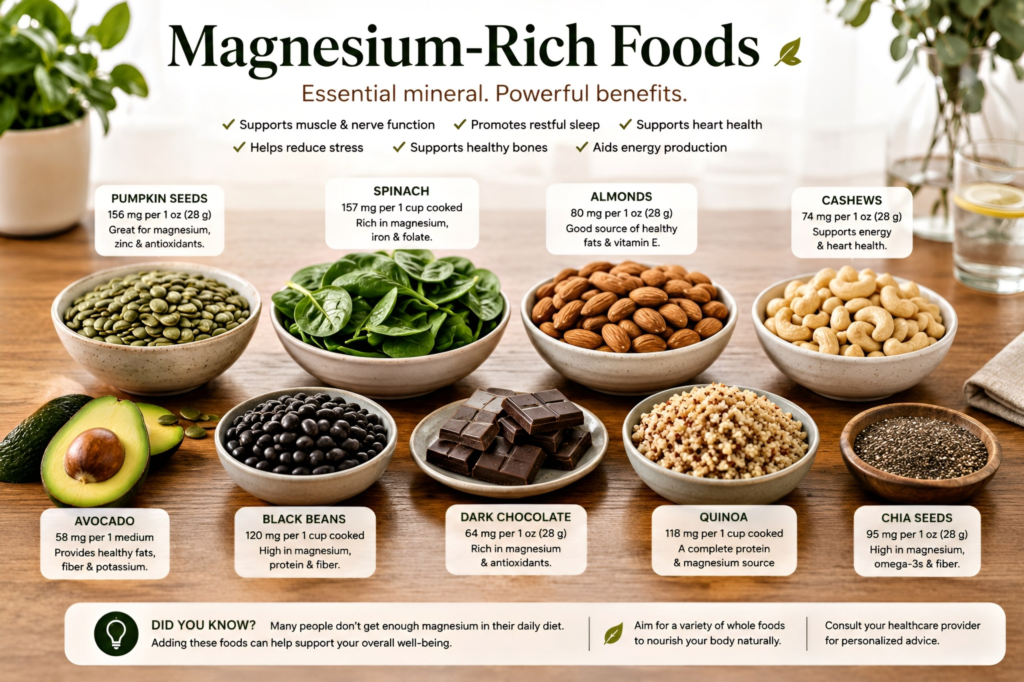
Foods Naturally Rich in Magnesium
While magnesium supplements receive significant attention, food should remain the foundation of a healthy diet whenever possible.
Many whole foods naturally contain magnesium along with fiber, vitamins, minerals, antioxidants, and other beneficial compounds that support overall health.
Some of the best dietary sources of magnesium include:
•Pumpkin seeds
•Chia seeds
•Almonds
•Cashews
•Spinach
•Swiss chard
•Black beans
•Lentils
•Avocados
•Dark chocolate
•Quinoa
•Tofu
•Edamame
For example, just one ounce (28 grams) of pumpkin seeds can provide approximately 150 mg of magnesium, making them one of the richest dietary sources available.
However, despite magnesium being present in many foods, surveys suggest that a significant portion of adults still fail to meet recommended intake levels. Processed foods, restrictive diets, chronic stress, and certain medications may further increase the risk of inadequate magnesium intake. This is one reason magnesium supplements have become increasingly popular among health-conscious women.
Best Types of Magnesium Supplements
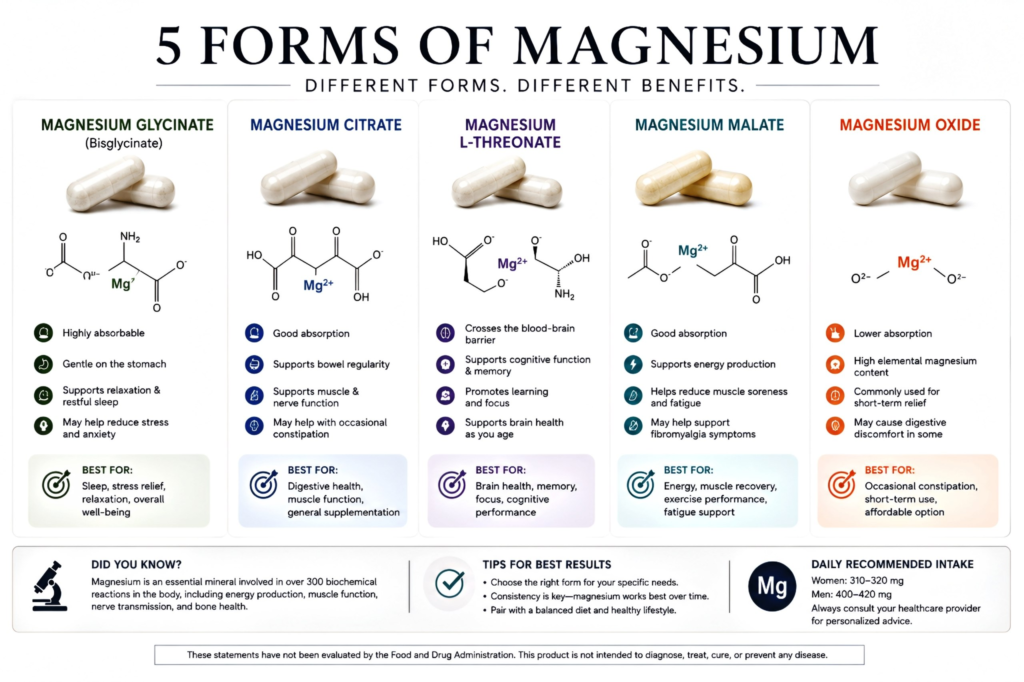
Not all magnesium supplements are identical. Different forms vary in absorption, digestive tolerance, and common uses. The most commonly used different forms of magnesium supplement are:
Magnesium Glycinate
Magnesium glycinate is one of the most popular forms because it is generally well absorbed and tends to be the most gentle on the digestive system.
It is frequently used by individuals interested in:
•Sleep support
•Relaxation
•Stress management
•Muscle recovery
Magnesium Citrate
Magnesium citrate is another highly bioavailable form.
It is commonly used for:
General magnesium supplementation
Digestive support
Occasional constipation
Some individuals may experience loose stools at higher doses.
Magnesium L-Threonate
Magnesium L-threonate has attracted attention because it may increase magnesium levels within the brain more effectively than some other forms by crossing the blood brain barrier.
Researchers have investigated this form for:
•Cognitive health
•Brain function
•Memory
•Sleep quality
Magnesium Malate
Magnesium malate combines magnesium with malic acid.
It is commonly marketed for:
•Energy production
•Muscle function
•Physical performance
Magnesium Oxide
Magnesium oxide contains a large amount of elemental magnesium but generally has lower absorption than some other forms.
It is often used for:
•Constipation as regular use
•General supplementation
The best form depends on an individual’s goals, digestive tolerance, medical history, and healthcare provider recommendations.
Common Signs of Magnesium Deficiency
Magnesium deficiency can be difficult to identify because symptoms are often nonspecific and may overlap with other conditions.
Possible signs associated with low magnesium status include:
•Fatigue
•Muscle cramps
•Muscle twitches
•Poor sleep
•Increased stress sensitivity
•Headaches
•Migraines
•Reduced exercise performance
•Mood changes
•Weakness
These symptoms can occur for many reasons and do not automatically indicate magnesium deficiency.
However, individuals experiencing persistent symptoms should discuss appropriate evaluation with a qualified healthcare professional.
Potential Side Effects and Safety Considerations
Magnesium is generally considered safe when consumed within recommended amounts.
However, excessive supplemental magnesium may cause:
•Diarrhea
•Abdominal discomfort
•Nausea
•Digestive upset
•People with kidney disease should be particularly cautious because impaired kidney function may reduce the body’s ability to eliminate excess magnesium.
Magnesium supplements may also interact with certain medications including:
•Some antibiotics
•Bisphosphonates
•Thyroid medications
•Certain blood pressure medications
For this reason, it is always wise to consult a healthcare professional before beginning supplementation, especially if you have a medical condition or take prescription medications.
Final Thoughts
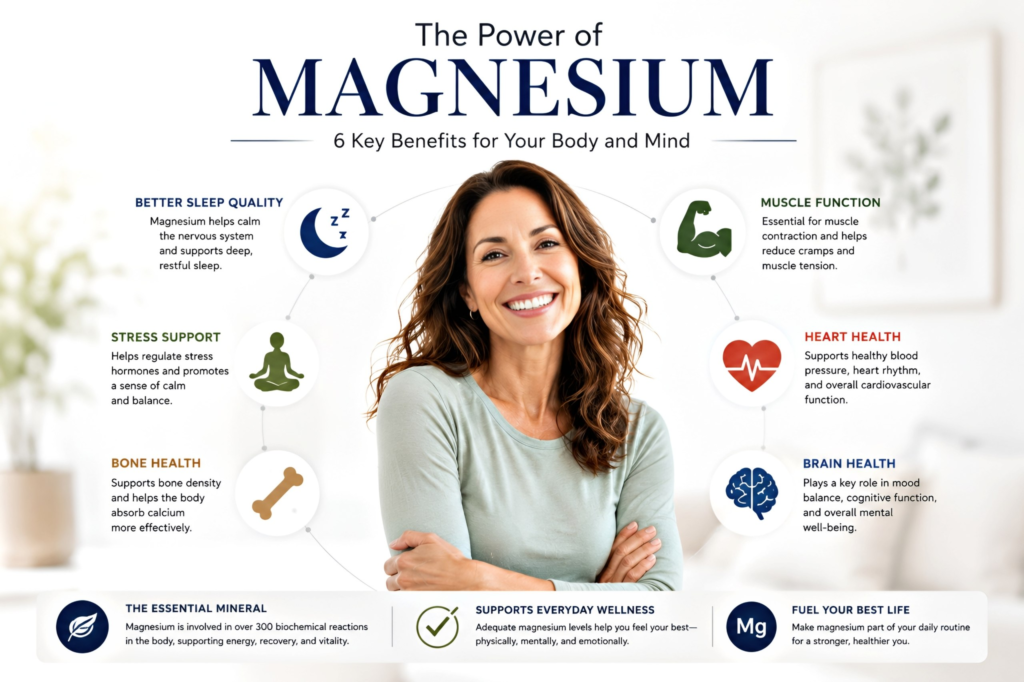
Magnesium is one of the most extensively studied minerals in nutrition science, and research suggests it may support many aspects of women’s health. From sleep quality and stress resilience to muscle recovery, bone health, cardiovascular wellness, metabolic function, and healthy aging, magnesium participates in hundreds of biological processes that help keep the body functioning properly.
The evidence reviewed backed by research studies in this article clearly suggests that magnesium benefits for women over 40 may extend across multiple body systems, making adequate magnesium intake an important consideration during midlife and beyond.
While magnesium is not a miracle supplement, maintaining healthy magnesium levels through a nutrient-rich diet and appropriate supplementation when necessary may help support overall well-being.
As always, the greatest benefits are likely to occur when magnesium is combined with healthy lifestyle habits such as regular exercise, quality sleep, stress management, and a balanced diet rich in whole foods.
Related Guides
Best Supplements for Women Over 40 (2026 Research Trials Evidence-Based Guide to Healthy Aging)
About the Moviva Research Team
The Moviva Research Team focuses on evidence-based wellness, healthy aging, nutrition science, inflammation research, and natural health education. Our content is developed using peer-reviewed scientific literature, human clinical trials, systematic reviews, randomized controlled trials, and meta-analyses. We aim to simplify complex research into practical, reader-friendly information that helps individuals make informed health decisions.
Medical Disclaimer
This article is for educational and informational purposes only and does not constitute medical advice, diagnosis, or treatment.
Magnesium supplements may interact with medications or medical conditions in some individuals. Always consult a qualified healthcare professional before starting any supplement, especially if you are pregnant, breastfeeding, have kidney disease, take prescription medications, or have underlying health conditions.
Scientific research continues to evolve, and individual responses to magnesium supplementation may vary based on health status, dosage, magnesium form, and overall lifestyle factors.