Introduction
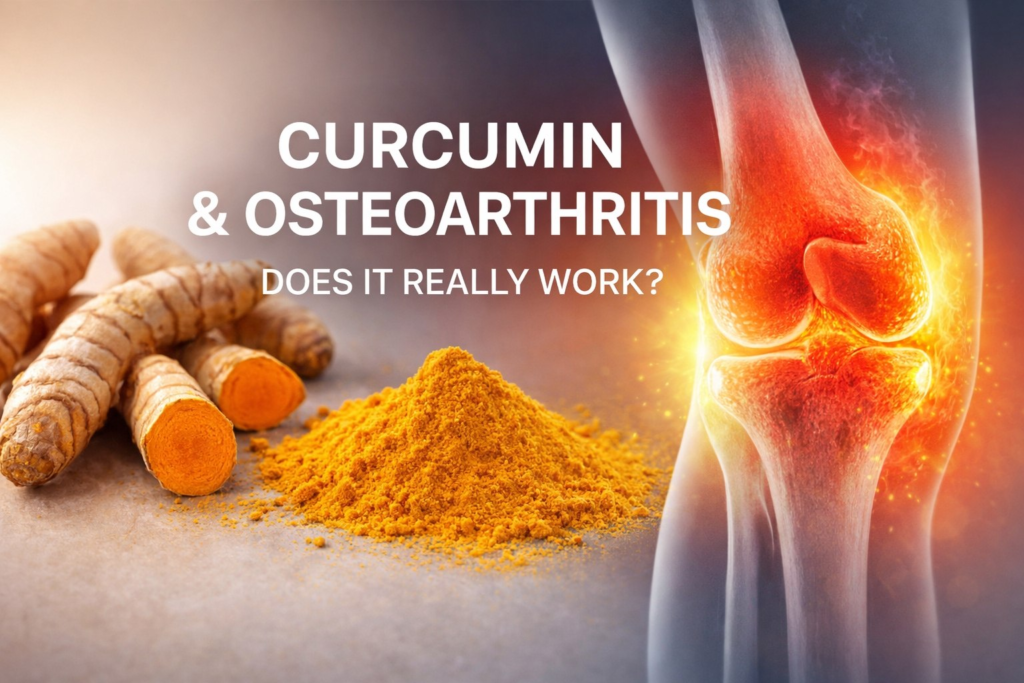
Knee osteoarthritis is one of the leading causes of chronic pain and disability worldwide, especially in older adults. It occurs due to the gradual breakdown of cartilage in the knee joint, leading to inflammation, stiffness, and reduced mobility.
Conventional treatments such as non-steroidal anti-inflammatory drugs (NSAIDs) are commonly used to manage symptoms. However, long-term use of these medications may be associated with side effects, which has led researchers to explore alternative approaches.
One of the most studied natural compounds is curcumin, the active component of turmeric. Curcumin has gained attention due to its anti-inflammatory and antioxidant properties, which may play a role in managing joint inflammation.
Recent clinical evidence, including a large meta-analysis (PubMed ID: 38036015), suggests that curcumin may have clinically meaningful effects in reducing pain and improving function in knee osteoarthritis, while also showing a favorable safety profile.
In this article, we examine what clinical studies reveal about curcumin and its potential role in supporting knee joint health.
Understanding Knee Osteoarthritis
Knee osteoarthritis is a degenerative joint condition that occurs when the protective cartilage in the knee gradually wears down over time. Cartilage acts as a cushion between the bones, allowing smooth movement. When this cartilage deteriorates, the bones may rub against each other, leading to pain, swelling, and stiffness.
This condition is most commonly seen in older adults, but it can also develop earlier due to factors such as obesity, joint injury, repetitive stress, or genetic predisposition. The knee joint is particularly vulnerable because it supports the body’s weight during daily activities like walking, standing, and climbing stairs.
Common symptoms of knee osteoarthritis include persistent knee pain, stiffness after periods of inactivity, reduced range of motion, and difficulty performing routine movements. Inflammation within the joint also plays a significant role in worsening these symptoms.
Because inflammation is a key factor in osteoarthritis progression, many treatments focus on reducing inflammatory processes. This is why both conventional medications and natural compounds like curcumin are being studied for their potential to support joint health.
What Is Curcumin
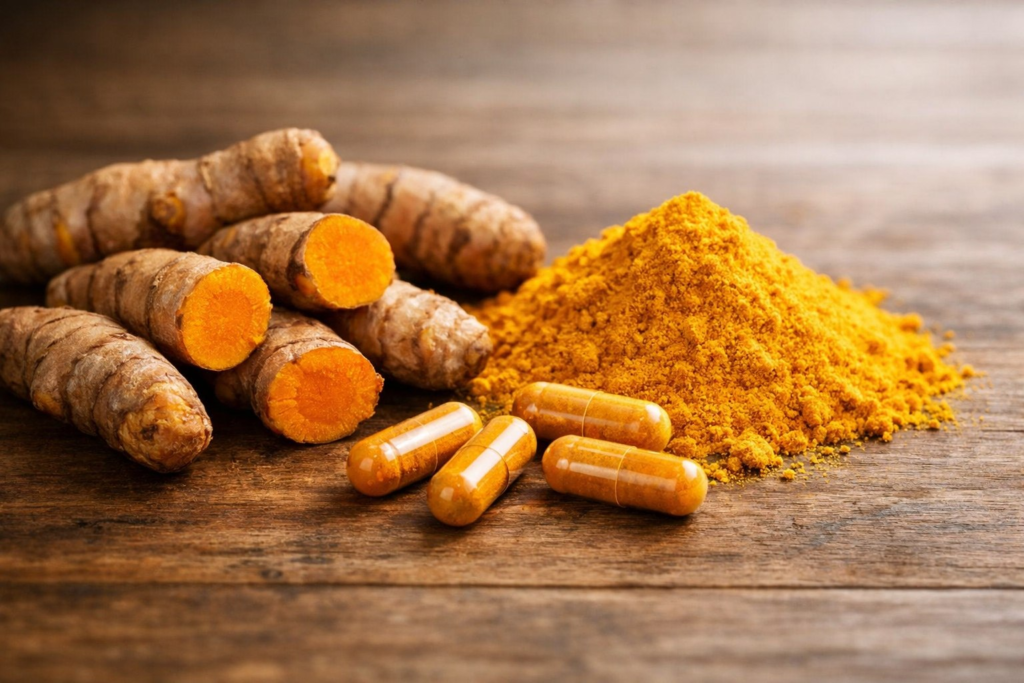
Curcumin is the primary active compound found in turmeric (Curcuma longa), a spice widely used in cooking and traditional medicine. It is responsible for turmeric’s bright yellow color and many of its potential health benefits.
For centuries, turmeric has been used in systems such as Ayurveda for its healing properties. In modern research, curcumin has gained attention due to its anti-inflammatory and antioxidant effects, which may help support various aspects of health, including joint function.
Curcumin belongs to a group of compounds known as polyphenols, which are known to interact with multiple biological pathways in the body.
Unlike many conventional drugs that target a single pathway, curcumin appears to influence several mechanisms related to inflammation and oxidative stress.
However, one important limitation is that curcumin has low natural bioavailability, meaning the body does not absorb it easily. For this reason, many supplements combine curcumin with compounds such as piperine (black pepper extract) to improve absorption.
Because of these properties, curcumin has been widely studied as a natural compound that may help support joint health and reduce inflammation associated with conditions like osteoarthritis.
How Curcumin May Help Reduce Joint Inflammation
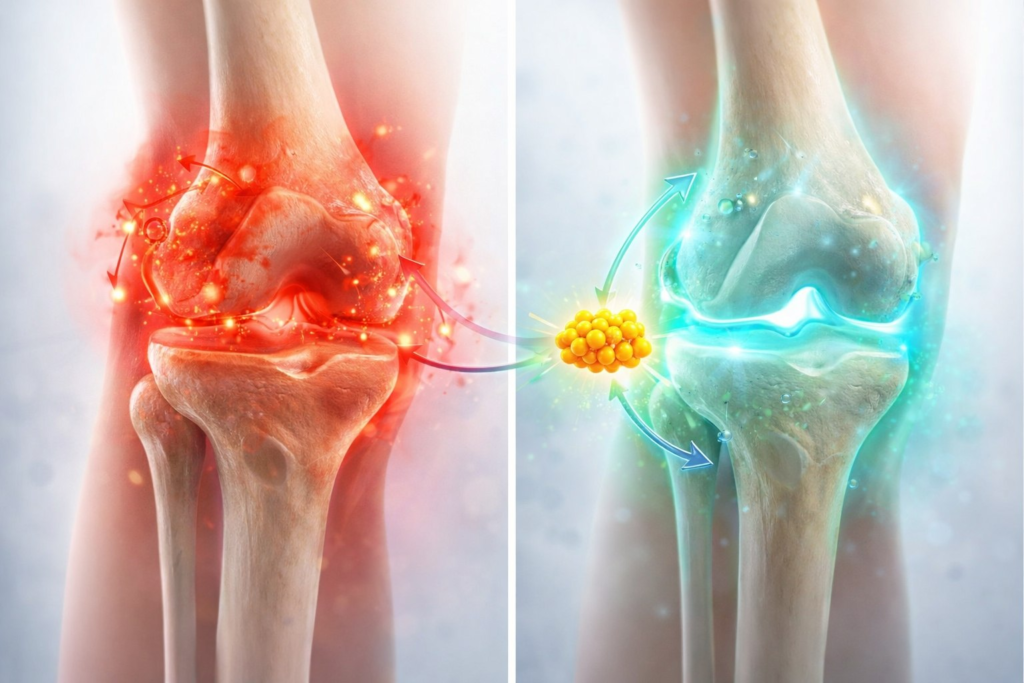
Curcumin has been widely studied for its ability to influence multiple pathways involved in inflammation. Unlike conventional medications that often target a single mechanism, curcumin appears to act on several biological processes at the same time.
Research suggests that curcumin may help reduce inflammation by inhibiting key signaling molecules such as NF-κB, which plays a central role in regulating the body’s inflammatory response. It may also reduce the production of inflammatory cytokines like tumor necrosis factor-alpha (TNF-α) and interleukin-6 (IL-6), which are commonly elevated in joint inflammation.
In addition, curcumin has been shown to suppress enzymes such as COX-2 and lipoxygenase, both of which contribute to the production of inflammatory compounds in the body. By influencing these pathways, curcumin may help reduce swelling and discomfort in affected joints.
Curcumin also acts as a powerful antioxidant, helping to neutralize free radicals that can damage joint tissues over time. Oxidative stress is believed to play a role in the progression of osteoarthritis, and reducing this stress may support joint health.
Because curcumin targets multiple inflammatory pathways, it is considered a promising natural compound for supporting joint function and managing inflammation associated with knee osteoarthritis.
Evidence From Clinical Studies
A recent network meta-analysis (Zhao et al., 2024) evaluated multiple randomized controlled trials investigating the effects of curcumin in patients with knee osteoarthritis. The analysis found that curcumin demonstrated good clinical efficacy and safety, both as a standalone treatment and in combination with other therapies.
The study included various clinical trials using different curcumin formulations and dosages. Across these studies, curcumin supplementation was consistently associated with reductions in pain scores and improvements in physical function. In some trials, curcumin showed comparable effectiveness to conventional treatments such as NSAIDs.
Several included studies also reported improvements in inflammatory markers, supporting the biological mechanisms through which curcumin may act. In addition, curcumin was generally well tolerated, with fewer adverse effects compared to standard anti-inflammatory medications.
Overall, the findings from this meta-analysis suggest that curcumin may be a promising option for managing symptoms of knee osteoarthritis. However, differences in study design, dosage, and formulation highlight the need for further standardized clinical trials.
Potential Benefits of Curcumin
Based on current clinical evidence, curcumin may offer several potential benefits for individuals with knee osteoarthritis.
One of the most commonly reported effects is reduction in joint pain. Multiple studies have shown that curcumin supplementation may help decrease pain intensity, particularly during movement and weight-bearing activities.
Curcumin may also contribute to improved physical function. Clinical trials have reported improvements in walking distance, joint mobility, and the ability to perform daily activities, suggesting a positive impact on overall quality of life.
Another important benefit is its anti-inflammatory effect. By influencing multiple inflammatory pathways, curcumin may help reduce swelling and stiffness in the knee joint, which are key symptoms of osteoarthritis.
In addition, curcumin has been associated with a favorable safety profile. Compared to some conventional treatments such as NSAIDs, curcumin is generally well tolerated and may cause fewer gastrointestinal side effects in many individuals.Some studies also suggest that curcumin may help reduce oxidative stress, which is believed to contribute to joint degeneration over time.
Overall, while results may vary between individuals, current research suggests that curcumin may provide meaningful support in reducing pain, improving function, and managing inflammation in knee osteoarthritis.
Limitations of Current Research
Although current research on curcumin is promising, there are several limitations that should be considered. One of the main limitations is the variation in study design. Different clinical trials use different dosages, formulations, and durations, making it difficult to directly compare results or establish a standardized treatment approach.
Another important factor is bioavailability. Curcumin is not easily absorbed by the body in its natural form. Many studies use enhanced formulations combined with substances such as piperine or other delivery systems to improve absorption. This means results may vary depending on the type of supplement used.
Most studies are also conducted over relatively short durations, typically ranging from 4 to 12 weeks. While short-term results are encouraging, there is limited data on the long-term effectiveness and safety of curcumin in managing osteoarthritis. In addition, many clinical trials involve moderate sample sizes, and larger, more diverse populations are needed to confirm consistent outcomes across different groups.
Finally, while curcumin may help manage symptoms, it is important to note that it does not reverse the underlying structural changes associated with osteoarthritis. Because of these limitations, further large-scale and long-term studies are needed to better understand the full potential of curcumin in joint health.
Conclusion
Knee osteoarthritis is a common condition that can significantly impact daily life by causing pain, stiffness, and reduced mobility. While conventional treatments such as NSAIDs are widely used, concerns about long-term side effects have led to increased interest in alternative approaches.
Curcumin, the active compound in turmeric, has been extensively studied for its anti-inflammatory and antioxidant properties. Clinical evidence, including recent meta-analyses, suggests that curcumin may help reduce pain and improve physical function in individuals with knee osteoarthritis, while also demonstrating a favorable safety profile.
However, it is important to recognize that results may vary depending on dosage, formulation, and individual response. Curcumin should be considered as a supportive option rather than a replacement for medical treatment. Individuals experiencing persistent or severe joint pain should consult a qualified healthcare professional for proper diagnosis and personalized treatment.
Scientific References
Zhao J, et al. (2024)
Efficacy and safety of curcumin therapy for knee osteoarthritis: a network meta-analysis
https://www.sciencedirect.com/science/article/pii/S0378874123013636